
Misophonia and Hyperacusis: When Everyday Sounds Become Too Much


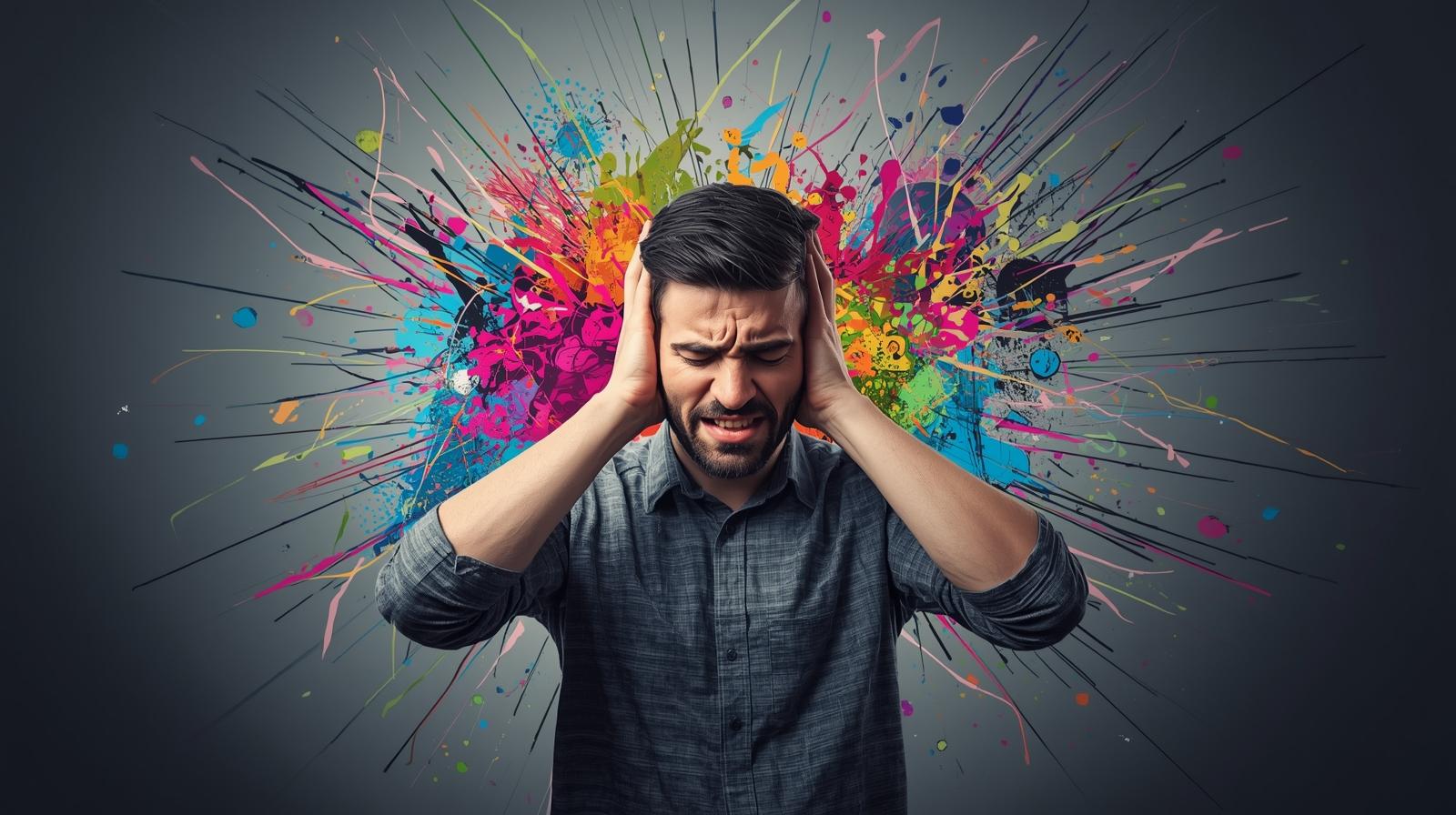
Imagine sitting in a quiet office and suddenly finding yourself overwhelmed with rage because the person next to you is chewing gum. Or picture walking into a coffee shop only to feel a wave of panic when the milk steamer hisses. For most people, these sounds are minor annoyances. But for individuals with misophonia or hyperacusis, everyday noises can feel unbearable—sometimes even life-altering.
What Are Misophonia and Hyperacusis?
Hyperacusis is generally described as an abnormal sensitivity to ordinary sounds. Patients often say that common noises, such as dishes clattering, children shouting, and traffic passing, feel painfully loud or physically distressing. Misophonia, by contrast, is not about volume but about the emotional reaction to specific trigger sounds, most often human-generated noises like chewing, breathing, or pen clicking. These sounds can provoke intense anger, disgust, or anxiety (Jastreboff & Jastreboff, 2014; Kumar et al., 2017).
Though distinct, the two conditions frequently overlap. Patients sometimes present with both reduced sound tolerance and strong emotional reactivity to particular triggers. For clinicians, teasing apart the symptoms and guiding patients through appropriate management can be challenging—but deeply rewarding.
Why Are We Seeing More Cases?
At our clinic, referrals for sound tolerance issues have increased steadily over the past few years. Part of this trend may reflect greater awareness. Online communities, social media, and documentaries have given names to experiences patients once struggled to articulate. But environmental and cultural factors may also be at play.
In a world that is becoming increasingly noisy (think open-concept offices, constant notifications, and amplified public spaces) people with reduced sound tolerance feel more exposed. The pandemic may also have heightened awareness. Spending long stretches in quiet home environments during lockdown made many individuals acutely sensitive when returning to bustling workplaces and schools.
Living With “Invisible” Conditions
What makes misophonia and hyperacusis so difficult is that they are invisible. A person sitting across from you at dinner may look fine, but internally they are battling a fight-or-flight reaction every time you sip your drink. Some patients withdraw socially, avoiding restaurants, public transit, or even family gatherings. Others endure in silence, fearing they will be dismissed as “too sensitive.”
One patient described her experience to me as “walking around with my nerves on the outside of my body.” For her, the sound of cutlery scraping on plates could derail an entire evening. Another young man, diagnosed with misophonia, confessed that his relationship almost collapsed because he could not tolerate the sound of his partner eating. These are not minor irritations, they are daily battles with significant consequences for relationships, work, and mental health (Swedo et al., 2021).
The Role of the Audiologist
Audiologists play a pivotal role in helping patients navigate sound tolerance disorders. The first step is validation. Simply telling patients that their experiences are real and shared by others often brings immense relief. From there, management strategies may include:
- Counseling and education, which help patients and families understand the condition and avoid reinforcing maladaptive responses.
- Sound exposure and sound enrichment therapy, using low-level background sounds to desensitize the auditory system and reduce the contrast between trigger sounds and silence. This can be done in a formal, clinician-led, structured way, or informally, in a patient-led way at home – with or without a prescriptive device.
- Interdisciplinary referrals, particularly to psychologists, psychotherapists or occupational therapists, when emotional regulation or coping strategies require additional support.
While there is no “cure,” patients often make meaningful progress. In some cases, they regain the ability to dine out, return to classrooms, or reconnect with loved ones without overwhelming distress.
Research and Hope for the Future
Scientific understanding of misophonia and hyperacusis is still evolving. Neuroimaging studies suggest that misophonia involves hyperactivation of brain regions responsible for emotion and salience, such as the anterior insular cortex (Kumar et al., 2017). Hyperacusis, on the other hand, may involve abnormal gain within the central auditory pathways, amplifying the perceived intensity of sound (Formby et al., 2003).
Although much remains to be learned, the growing body of research offers hope. By combining clinical expertise with ongoing scientific discovery, audiologists are uniquely positioned to bridge the gap between patients’ lived experiences and effective care.
Changing the Conversation
Ultimately, what matters most is changing the conversation. Too often, patients with misophonia or hyperacusis are told to “just get over it” or “stop focusing on it.” These dismissals not only fail to help, rather they deepen isolation and shame. As audiologists, we have the opportunity to validate, guide, and support individuals whose lives are profoundly affected by sound. In our clinic, we see patients who are distressed by sound sensitivities all the time, and we help them return to their lives with the strategies listed above (i.e., education, counseling, sound exposure therapy, sound enrichment therapy, and interdisciplinary referrals).
The next time someone says, “I can’t stand the sound of chewing,” we should resist the urge to laugh it off. For some, that sound is not a quirk—it is a condition. And with the right care, their world of sound can become manageable again.
References
- Formby, C., Sherlock, L. P., & Gold, S. L. (2003). Adaptive plasticity of loudness induced by chronic attenuation and enhancement of the acoustic background. Journal of the Acoustical Society of America, 114(1), 55–58.
- Jastreboff, M. M., & Jastreboff, P. J. (2014). Decreased sound tolerance and misophonia. Seminars in Hearing, 35(2), 105–120.
- Kumar, S., Tansley-Hancock, O., Sedley, W., Winston, J. S., Callaghan, M. F., Allen, M., ... & Griffiths, T. D. (2017). The brain basis for misophonia. Current Biology, 27(4), 527–533.
- Swedo, S. E., Baguley, D. M., Denys, D., Dixon, L. J., Erfanian, M., Fioretti, A., ... & Kumar, S. (2021). Consensus definition of misophonia: A Delphi study. Frontiers in Neuroscience, 15, 755–813.