
The Fountain of Youth: Building Trust with Truth and Stopping Misinformation in Audiology


What’s New About Getting Older?
Kathy Pichora-Fuller's column “What’s new about getting older?” delves into all aspects of ageing and hearing ranging from health policy developments to neurophysical research on the aging auditory brain.

Living in a New Virtual World
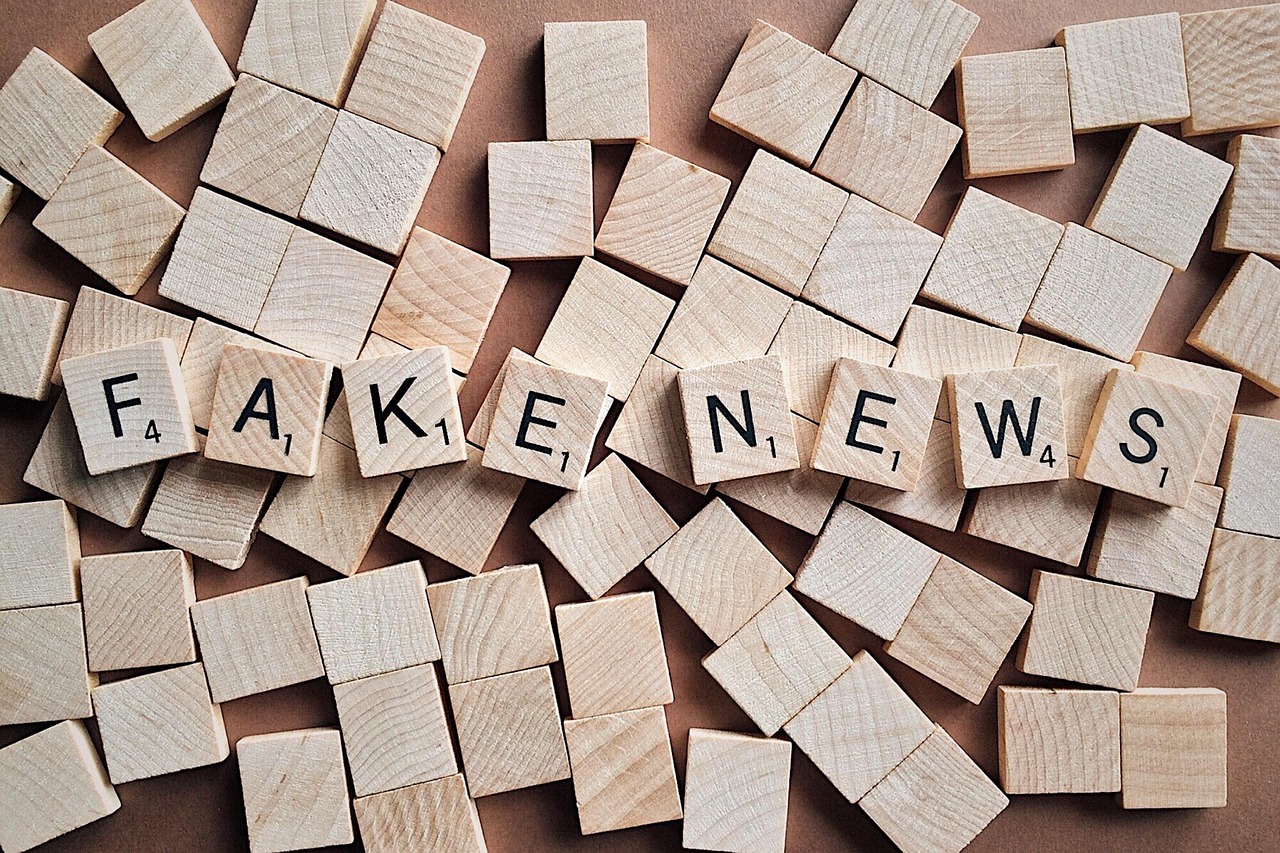
As we enter 2026, it is becoming increasingly difficult to distinguish between facts and fakes in our rapidly evolving virtual world. AI algorithms may provide rapid access to helpful summaries of information, but they often accelerate the explosion of misinformation by drawing viewers’ attention to a wide range of sophisticated deceptions. Health care providers and patients alike can be lured by the false claims of fake authorities about health issues and cures that are too good to be true. Hope springs eternal but too often we may succumb to empty or false hopes. Meanwhile, authentic scientific sources and evidence-based analyses of the benefits (or lack thereof) of treatments have become more difficult to identify. As reality and truth become elusive, trust is eroded. As trusted healthcare professionals, audiologists must preserve and promote truth to safeguard against misinformation.
The Association of Canadian Advertisers (ACA) and the Federal Trade Commission (FTC) in the United States were both founded in 1914, shortly after the beginning of the scientific phase of the ‘truth in advertising’ movement (Hess, 1922). According to the FTC,
“When consumers see or hear an advertisement, whether it’s on the Internet, radio or television, or anywhere else, federal law says that ad must be truthful, not misleading, and, when appropriate, backed by scientific evidence. The FTC enforces these truth-in-advertising laws, and it applies the same standards no matter where an ad appears – in newspapers and magazines, online, in the mail, or on billboards or buses. The FTC looks especially closely at advertising claims that can affect consumers’ health or their pocketbooks – claims about food, over-the-counter drugs, dietary supplements, alcohol, and tobacco and on conduct related to high-tech products and the Internet.” (FTC, 2026).
The relevance of truth in communications about health products and treatments will be even more important in 2026 than it has ever been before because of the surge in the pervasiveness and potency of misinformation enabled by AI. Why is this particularly important for audiologists working with older adults?
Potential Vulnerability of Older Adults to Health Misinformation
Older people may be more vulnerable to health misinformation than younger people for a variety of reasons. Living with multiple age-related health issues and anticipating end of life may be associated with emotions such as fear that may shape how older adults consume health information. The hope of finding of the Fountain of Youth has endured from the 12th century to today. While older adults today may not be searching for the miracle of living forever, many aspire to become centenarians, and there is strong motivation for older people to find ways to age well. Indeed, the United Nations (2012) has recognized that “We have added years to life, it’s time to add life to years.”
Misinformation about ways to prevent or cure dementia abounds. The use of such misinformation would fail to meet either the standards for truth in advertising or the code of ethics of health professionals. At a recent seminar on dementia-inclusive communities, I was surprised to witness an older person clutching pill bottles as she took the microphone to proclaim her belief in the value of taking Ginkgo biloba to prevent dementia. This proclamation was startling because it had no connection to the seminar’s topic and because of the strength of her testimony, with a striking mismatch between her conviction and the weakness of the scientific evidence. Why she believed so strongly that this dietary supplement would prevent dementia was unclear. Did the misinformation come from social media or a seller of remedies? Apparently, she had not done a simple Google search that would have taken her to a recent systematic review that does not support her bold personal claim (Pagotto et al., 2024). To what extent are hearing aids similar to Ginko biloba in the minds of some older adults?
The desperate hope of older adults to find a cure for dementia could be a common explanation for why they might fall prey to misinformation about the benefits of taking dietary supplements or using hearing aids. Taking dietary supplements may have adverse effects on physical health that are not of concern when people wear hearing aids, but selling technologies based on false claims would violate the principles of truth in advertising and contravene legal and ethical standards. The benefits of hearing aids for communication are clear, and these benefits should be ample grounds for selling these devices without any need to invoke unsupported claims about benefits for preventing or curing dementia. The need to control misinformation about whether or not hearing aid use can prevent or reverse cognitive decline and dementia has become an important topic in audiology. Indeed, a number of articles on this topic have been published in the Canadian Audiologist over the last two years. In November 2024, the British Society of Audiology, the British Academy of Audiology, and the British Society of Hearing Aid Audiologists published a joint position statement and practice guidance on “The link between adult-onset hearing loss and dementia,” recognizing the importance of addressing misinformation in audiology. As healthcare professionals, audiologists have an important role in helping older adults to live well and in providing evidence-based information about the benefits of audiologic rehabilitation, without creating false hopes by propagating false claims about reducing dementia risk.
What can you do?
A New Year’s resolution for audiologists in 2026 is to learn more about how to protect themselves and their older patients/clients from health misinformation in general, with a view to applying this knowledge to fighting misinformation concerning ways to prevent or cure dementia (or not) in their own advertising and clinical practices. A place to begin is to check out a 2023 consensus paper on understanding and fighting health misinformation published by the American Psychological Association (APA, 2023a) and the accompanying online resources.
The APA report covers research evidence to answer three key questions:
1. What psychological factors make people susceptible to misinformation?
According to the consensus paper (APA, 2023b), these factors include the source of information, the content, and the degree of repetition, as well as the consumer’s personality characteristics. Notably, educational attainment, analytical reasoning abilities, and numeracy skills can increase resistance to misinformation, whereas anxiety can increase a person’s likelihood of believing it. Older adults may be better at identifying misinformation than younger adults, yet they are also more likely to see and share false information they encounter on social media.
2. How and why does misinformation spread?
The consensus paper (APA, 2023c) found that people are more likely to share misinformation when it aligns with personal identity and social norms, is novel, or elicits strong emotions.
3. What interventions are effective in countering misinformation?
Relevant to rehabilitation, the consensus paper (APA, 2023d) found that misinformation can be countered through debunking, prebunking, literacy training, and nudging to change individual behaviours.
Recommendations
The consensus report (APA, 2023e,f) makes eight recommendations. These recommendations are considered relevant for scientists, policymakers, the media, and the public to address the ongoing risk of misinformation to health, well-being, and civic life. They could apply easily to audiologists and hearing aid companies who want to champion the fight against misinformation.
- Avoid repeating misinformation without including a correction.
- Collaborate with social media companies to understand and reduce the spread of harmful misinformation.
- Use misinformation correction strategies with tools already proven to promote healthy behaviors (e.g., counseling, skills training, incentives, social norms).
- Leverage trusted sources to counter misinformation and provide accurate health information.
- Debunk misinformation often and repeatedly using evidence-based methods.
- Prebunk misinformation to inoculate susceptible audiences by building skills and resilience from an early age.
- Demand data access and transparency from social media companies for scientific research on misinformation.
- Fund basic and translational research into the psychology of health misinformation, including effective ways to counter it.
Online resources and training:
An excellent free, interactive online training program called “Mind over Misinformation” (APA, 2023g) accompanies the consensus report. The modules in the program will help you:
- Identify potential misinformation,
- Recognize your own biases and how they might affect your judgment,
- Evaluate emotional content more objectively,
- Apply your cognitive skills, education, and experience to fact-checking,
- Approach different media sources with appropriate skepticism.
Let’s make 2026 a year to build trust with truth and stop misinformation in Audiology.
References
- American Psyhological Association (2023a). Using psychology to understand and fight health misinformation: An APA Concensus statment. PDF accessed online at https://www.apa.org/pubs/reports/misinformation-consensus-statement.pdf on January 1, 2026.
- APA (2023b). What psychological factors make people susceptible to believe and act on misinformation? Accessed online at https://www.apa.org/topics/journalism-facts/misinformation-belief-action on January 1, 2026.
- APA (2023c). How and why does misinformation spread? Accessed online at https://www.apa.org/topics/journalism-facts/how-why-misinformation-spreads on January 1, 2026.
- APA (2023d). What interventions can be used to counter misinformation effectively? Accessed online at https://www.apa.org/topics/journalism-facts/misinformation-interventions on January 1, 2026.
- APA (2023e). Using psychology to understand and fight health misinformation:An APA consensus statement. Accessed online at https://www.apa.org/pubs/reports/health-misinformation on January 1, 2026.
- APA (2023f). 8 recommendations for countering misinformation. Accessed online at https://www.apa.org/topics/journalism-facts/misinformation-recommendations on January 1, 2026.
- APA (2023g). Mind over Misinformation. Accessed online at https://digital.apa.org/misinformation-effect/ on January 1, 2026.
- British Society of Audiology, the British Academy of Audiology, the British Society of Hearing Aid Audiologists. (2024). The link between adult-onset hearing loss and dementia. Accessed online at https://baaudiology.org/wp-content/uploads/2024/11/Position-statement-HL-and-dementia-a-guide-for-hearing-professionals-Nov-2024.pdf on January 1, 2026.
- Federal Trade Commission. Truth in Advertising. Accessed at https://www.ftc.gov/news-events/topics/truth-advertising on January 1, 2026.
- Herbert W. Hess. (1922). History and Present Status of the “Truth-in-Advertising” Movement As Carried on by the Vigilance Committee of the Associated Advertising Clubs of the World. The Annals of the American Academy of Political and Social Science, 101, 211–220. http://www.jstor.org/stable/1014611
- Pagotto, G. L. O., Santos, L. M. O. D., Osman, N., Lamas, C. B., Laurindo, L. F., Pomini, K. T., Guissoni, L. M., Lima, E. P., Goulart, R. A., Catharin, V. M. C. S., Direito, R., Tanaka, M., & Barbalho, S. M. (2024). Ginkgo biloba: A Leaf of Hope in the Fight against Alzheimer’s Dementia: Clinical Trial Systematic Review. Antioxidants (Basel, Switzerland), 13(6), 651. https://doi.org/10.3390/antiox13060651
- United Nations. (2012). World Health Day 2012: Adding life to years. Accessed at https://www.who.int/westernpacific/news/item/04-04-2012-world-health-day-2012-adding-life-to-years on January 1, 2026