
From the Labs to the Clinics


From the Labs to the Clinics
Renowned auditory researcher Dr. Robert Harrison brings us up to date on information and research from the Labs. Appropriately titled “From the Labs to the Clinics”, Bob is involved in laboratory and applied/clinical research, including evoked potential and otoacoustic emission studies and behavioural studies of speech and language development in children with cochlear implants. For a little insight into Bob’s interests outside the lab and the clinic, we invite you to climb aboard Bob’s Garden Railway.
Science is Better with Sex and Gender
Diversity, equity, and inclusion (DEI) have long been important considerations in scientific and medical research. Since 2021, our major research funding agency, the Canadian Institutes of Health Research (CIHR) has mandated the integration of sex and gender considerations into health-related research [1]. Indeed, CIHR has been a world leader in promoting these issues, and argues that this makes health research more rigorous, more reproducible, and more applicable to everyone. This funding agency, and others worldwide, insist that all aspects of a research funding application address issues of biological sex and socio-cultural gender issues (where appropriate). This includes the design of the research studies, the methods to be employed, the analysis of the data, and, finally, the knowledge translation of the results. The ultimate goal is to ensure that new healthcare-related findings are more inclusive, more effective, and provide “equitable health outcomes for diverse populations”.
Federal Health Canada Policy
These DEI initiatives for our scientific research agencies were established in the wake of a broader Government of Canada’s “Health Portfolio” which set out (in 2009) to adopt a “Sex and Gender-Based Analysis Plus” (SGBA Plus) policy. The aim was to ensure that a sex and gender-based lens was used to evaluate health research, surveillance, legislation, regulations, clinical programs, and related services. In short, the objective of this policy was to integrate a sex and gender-based perspective into all health-related activities to advance equity, diversity and inclusion [2].
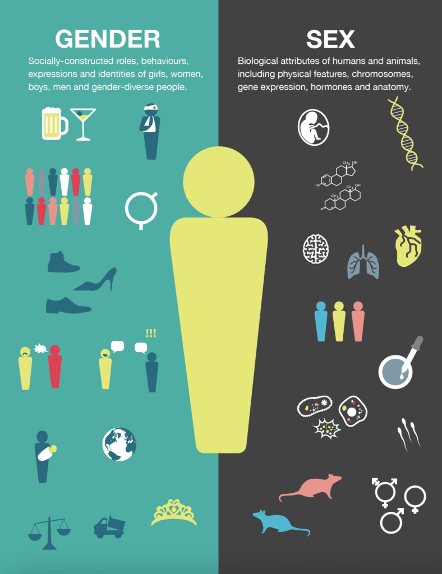
Sex and Gender in Health Research
Although the full force of DEI in the Canadian Institutes of Health Research came after the Health Canada lead, I remember that much earlier on we had many discussions at CIHR research funding committees about sex and gender issues being addressed in research proposals. In non-human animal studies, the emphasis was on whether both male and female animal subjects were included in the experimental design. For research involving human subjects and, in general, healthcare research, there was growing evidence that biological and social differences between women, men, girls, boys, and gender-diverse people contribute to differences in their health. It was also clear that sex (biological attributes) and gender (socio-cultural factors) influence the risk of developing certain diseases and responses to medical treatments [3].

A further initiative by CIHR was to establish an Institute of Gender and Health [4] which leads efforts to make science more rigorous and inclusive by integrating sex and gender. There is a solid belief that evidence from sex and gender science will inform better health policies and clinical guidelines.
References
- Science is better with sex and gender. https://cihr-irsc.gc.ca/e/51310.html
- Sex and Gender-Based Analysis Plus in Action at Health Canada. https://www.canada.ca/en/health-canada/corporate/transparency/sex-gender-based-analysis-action.html
- Comeau D, Johnson C, Bouhamdani N. Review of current 2SLGBTQIA+ inequities in the Canadian health care system. Front Public Health. 2023 Jul 18;11:1183284. doi: 10.3389/fpubh.2023.1183284.
- Institute of Gender and Health. https://cihr-irsc.gc.ca/e/8673.html