
Industry News


Alberto Gorini–The New General Manager of Amplifon-Canada
From Alberto Gorini:
“I moved to Canada in October together with my family — my wonderful wife and our five-year-old twin daughters, who are truly my most important job. Being Italian, I naturally speak Italian and English, a bit of Spanish, and I’m still working on my French. I’m also very much a cold-weather person and a passionate skier, so I’m confident Canada will be the perfect place to feel at home.
I was already working in the broader healthcare and pharmaceutical space, and I have always been drawn to the strong purpose of industries that genuinely improve people’s lives. Entering the hearing care world made that purpose even more tangible — helping individuals rediscover the emotions of sound and reconnect with everyday experiences.
Amplifon, as the global leader in this field, represents the benchmark for the category. Amplifon Canada is an especially exciting challenge; a market where we have grown significantly in recent years, yet still holds meaningful opportunity to further strengthen our network quality and pursue our future ambitions.”

Gael Hannan's TED Talk
Our regular columnist and hard of hearing advocate, Gael Hannan has given a recent TED talk on How to communicate better with hearing loss | Gael Hannan | TEDxVictoria
Advancing Quality of Life for Deaf and Hard of Hearing Communities: Canadian Hearing Services Awards Four New Research Grants
Toronto, ON - January 19, 2026 - Global Partnerships for Research & Innovation, the research arm of Canadian Hearing Services, has awarded four new research grants totaling
$368,756 to leading institutions across Canada and beyond. Since its launch in 2022, CHS Global Partnerships for Research & Innovation has awarded $1,466,744 in grants, strengthening its role as a key driver of innovation and evidence-based solutions. These grants support research aimed at improving the quality of life of Deaf and hard of hearing people through technological advancements and new approaches in both hearing health and Deaf studies.
According to the World Health Organization (WHO), by 2050 nearly 2.5 billion people are projected to have some degree of hearing loss. This reality highlights why innovative research and practical solutions are needed now more than ever.
This year’s award recipients are tackling key issues affecting accessibility, communication equity, social participation, and hearing health outcomes. Each funded project reflects our commitment to advancing research that has a direct and lasting impact on the lives of Deaf and hard of hearing people.
“On behalf of Canadian Hearing Services, I am pleased to congratulate this year’s grant recipients. These outstanding researchers are helping us drive meaningful progress that supports Deaf and hard of hearing communities worldwide,” says Julia N. Dumanian, President & Chief Executive Officer of Canadian Hearing Services. “We are proud to bring together the resources, expertise, and passion needed to create impactful change that improves and advances the quality of life for Deaf and hard of hearing individuals.”
We are honored to present the following principal investigators and their host institutions with CHS Global Partnerships for Research & Innovation Research Grants:
Andrew Wister, Ph.D., Simon Fraser University (Grant Award: $97,866)
Staying connected: How social support, social participation, social isolation, and loneliness can make a difference in hearing care access and outcomes. This project will provide new information about the connections between hearing loss and social relationships, and the importance of hearing care access for overall health. Learn more.
"This research project, funded by Canadian Hearing Services’ Global Partnerships for Research & Innovation, will advance our understanding of the complex associations of hearing loss, social isolation, and social participation among our growing aging population in Canada. We hope that our results will help to direct innovations in practice and policy to
enhance hearing loss resilience among aging individuals," said Andrew Wister, PhD, Director, Gerontology Research Centre at Simon Fraser University.
Marlene Bagatto, Au.D., Ph.D., The University of Western Ontario (Grant Award: $94,337)
Advancing Pediatric Hearing Healthcare in Canada: Exploring the role of risk factor screening and social determinants to improve equity. This project will inform policies and practices aimed at improving hearing healthcare for children across Canada, ultimately reducing health inequities and improving developmental outcomes for children born with hearing loss. Learn more.
Philippe Fournier, Ph.D., Université Laval (Grant Award: $90,400)
Measuring the pleasantness/loudness of natural sounds & the functional impact of noise on hearing aid and cochlear implant users. This project will explore how hearing aid and cochlear implant users adapt to noise and could drive improved rehabilitation strategies that validate patient experiences and optimize device use in noisy environments. Learn more.
Danielle Glista, Ph.D., The University of Western Ontario (Grant Award: $86,153)
Global Partnerships for Sustainable Virtual Hearing Healthcare. This project will design and improve a family-focused virtual care toolkit to support hearing aid services for children who are Deaf and hard of hearing. Learn more.
The winning projects were rigorously evaluated by our Grant Review Panel, comprised of established national and international researchers from around the globe.
We are excited to announce that on January 26, 2026, CHS Global Partnerships for Research & Innovation will begin accepting Letters of Intent for the two-year funding cycle beginning in fall 2026. Visit the Funding Application page for more details.
About the Research Grants
CHS Global Partnerships for Research & Innovation funds research that improves the quality of life for Deaf and hard of hearing individuals and aligns and supports the following research areas of focus: Hearing Health, Hearing Science, Deaf Studies, and Quality of Life.
Research funding applications are reviewed by a Grant Review panel comprised of national and international researchers. Our Research & Innovation Advisory Council, comprised of senior researchers, acts as observers and strategic advisors to ensure a fair and transparent awards process, making recommendations to the Board of Directors on Full Applications approved for funding.
View the full list of Grant Review Panel members here.
About Canadian Hearing Services Global Partnerships for Research & Innovation
CHS Global Partnerships for Research & Innovation is a non-profit organization and strategic leader in the advancement of research and innovation that improves the quality of life for Deaf and hard of hearing individuals. As the research and innovation arm of Canadian Hearing Services, it supports intellectual inquiry by providing research grants that address multifaceted issues related to hearing loss and facilitates innovative solutions for the sector.
Media Contact: information@chsglobalpartnerships.com
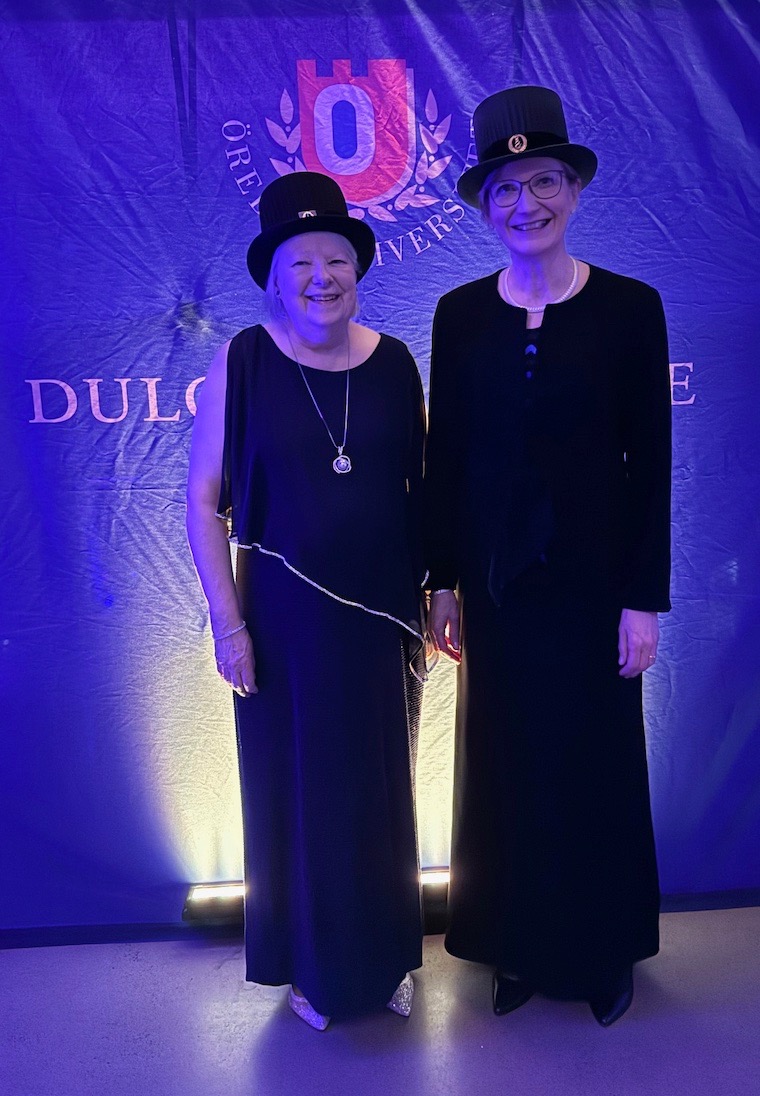
Margaret Kathleen Pichora-Fuller receives Honourary Doctor of Medicine from Örebro University
Margaret Kathleen Pichora-Fuller is Professor Emerita in the Department of Psychological and Brain Sciences at the University of Toronto Mississauga. She has a background in clinical audiology. During her academic career, she has held several prestigious positions, including Director of the Institute for Hearing Accessibility Research at the University of British Columbia and President-Elect of the International Collegium of Rehabilitative Audiology.
Margaret Kathleen Pichora-Fuller takes an interdisciplinary approach to her research, which focuses primarily on auditory ageing, cognition and, more recently, social engagement, healthy ageing and brain health. Her efforts to understand cognitive processes in speech and listening, and to improve functionality and rehabilitation within the target group, have been of great importance not only to that group, but also within the scientific community. She is an international authority in her field, with her expertise recognised both scientifically and socially. In 2014, the American Academy of Audiology awarded her the International Award. Speech-Language and Audiology Canada awarded her the Eve Kassirer Lifetime Achievement Award in 2021. In 2022, she became a Fellow of the Canadian Academy of Health Sciences. She has also contributed to the World Health Organization's World Report on Hearing and continues to serve on WHO committees.
Margaret Kathleen Pichora-Fuller has collaborated with researchers at Örebro University for many years, and her efforts have played an important role in the internationalisation of our research. We look forward to her continued contributions to positive developments in interdisciplinary disability research, including ageing research at Örebro University.
Dr. David Kemp- the discoverer of otoacoustic emissions- receives Commander of the Order of the British Empire (CBE) honour
From ENT and Audiology News- Used with permission
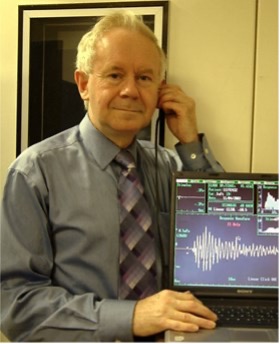
In the 2026 New Year's Honours, Emeritus Professor David Kemp has been made a CBE for services to auditory sciences and public health.
Professor Kemp of the UCL Ear Institute is widely known for his discovery of otoacoustic emissions – sounds emitted by the healthy inner ear. When the inner ear is damaged, the production of these sounds ceases. His work led to new, practical techniques for measuring hearing and the first NHS screening programme in 50 years for hearing in newborn babies. He also founded the company Otodynamics, which makes equipment to diagnose hearing defects.
Professor Kemp said: “This work involved many people and research groups – it was much bigger than my efforts. The aim was to stop kids born with bad hearing from being handicapped by not hearing and learning their language in their early years. Parents’ suspicions were ignored by doctors until they should have started to talk at 2-3 years and didn’t – this was too late. The answer was a test of hearing quick enough to give to every baby at birth – made possible by otoacoustic emissions. The ear is an amazing bit of bio-machinery and research goes on to uncover the mystery of how it works. I provided a missing piece of the jigsaw, but there are still lots of missing pieces to find.