
What’s New about Getting Older


What’s New About Getting Older?
Kathy Pichora-Fuller's column “What’s new about getting older?” delves into all aspects of ageing and hearing ranging from health policy developments to neurophysical research on the aging auditory brain.
Hearing Accessibility to Optimize Person-Environment Fit for Older Adults: Social Environments and Inclusion Matter
“My voice is loud so I don’t need to use the microphone.”
“People can hear so let’s not bother with the captions for this meeting.”
“It wasn’t important, so never mind.”
HEARING ACCESSIBILITY: FROM CLINIC TO SOCIETY
Defining Hearing Accessibility: The term ‘hearing accessibility’ refers to an activity or place being accessible if people who are hard of hearing can participate in it as effectively as people with normal hearing (Pichora-Fuller, 1994; Sharma, 2016). Furthermore, since even people who have normal audiograms may have difficulty hearing in challenging listening situations, a more exacting and inclusive definition is that activities or places are hearing accessible if difficulty hearing does not restrict the participation of any person.
From Rehabilitation to Accessibility: The World Health Organization’s International Classification of Functioning, Disability and Health (ICF; WHO, 2001, 2017) provides a model in which health conditions are characterized in terms of impairments to body functions and structures, activity limitations, and participation restrictions. Importantly, the model recognizes that environmental factors can modulate how impairments effect participation. The ICF model embodies a biopsychosocial-ecological view of health that has largely replaced an older, narrower biomedical view. Over the last five decades, audiology practice has shifted from a diagnostic focus on impairment to a rehabilitative focus on disability. In parallel, the formation of self-help organizations for people who are hard of hearing and the introduction of disability/accessibility legislation have created momentum to advance social policies promoting accessibility in communities. Hearing accessibility initiatives in society extend clinic-based audiologic rehabilitation through social action to optimize the person-environment fit needed to enable people living with hearing loss to fully participate and function in everyday life.
Solutions and Shortcomings: Hearing accessibility is achieved when barriers that restrict participation are overcome. Clinic-based rehabilition may be necessary but not sufficient to ensure accessibility. Participation can be facilitated by technological, environmental, and/or behavioral interventions. Technological solutions include the use of personal technologies (e.g., hearing aids) and/or institutional assistive listening devices used in group or public settings (e.g., room systems). Physical environmental solutions may involve architectural design or the modifications of acoustics and lighting. Social environmental solutions may involve policies and procedures that promote inclusion (e.g., mandatory microphone use, captioning). Therapeutic solutions involve interventions to train individuals and others to successfully adapt their communication behaviours and attitudes. Importantly, successful solutions in everyday life situations usually combine technological, environmental, and behavioural/attitudinal approaches that can be adapted to optimize the person-environment fit. Rehabilitative audiologists can contribute to hearing accessibility by recommending appropriate technologies and providing training and counselling for individuals and communication partners. Technology can enhance functioning by improving the individual’s access to sensory inputs. Adopting a person-centered or family-centered approach to rehabilitation counselling and training can promote hearing accessibility by fostering self-management among individuals with hearing impairment and mutual support from and for their communication partners. Nevertheless, people living with hearing loss may still not fully achieve accessibility in everyday life because the person-environment fit remains mismatched in ways that cannot be assessed or managed in the clinic.
PERSON-ENVIRONMENT FIT AND AGING WELL
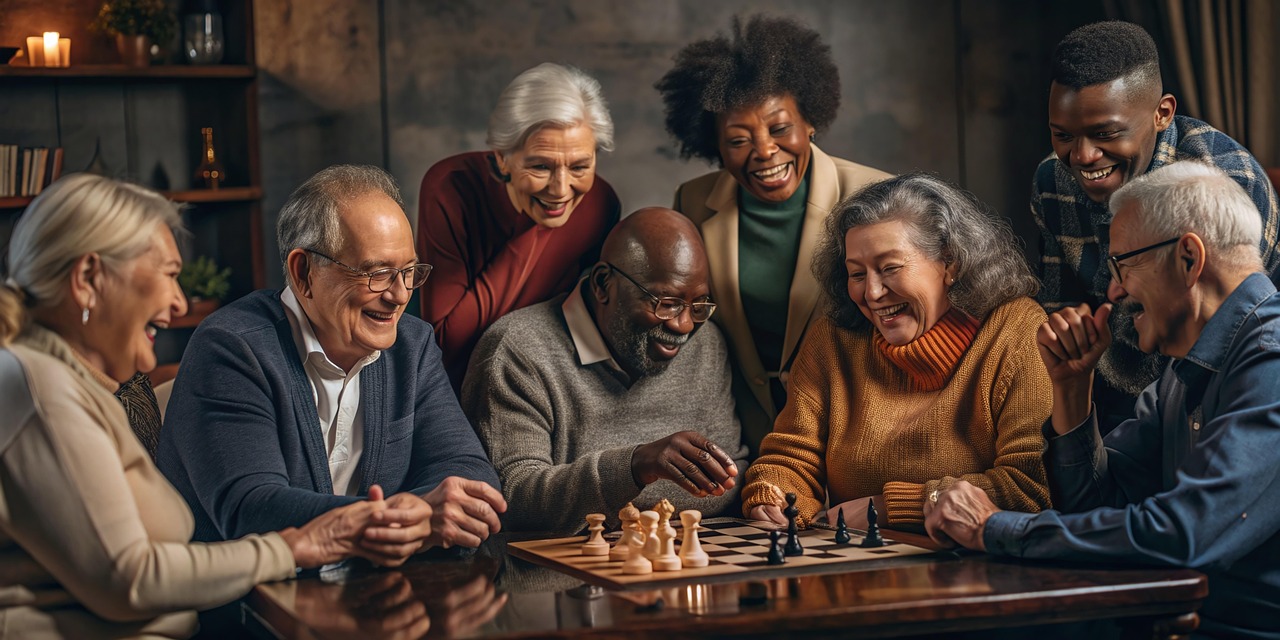
Healthy Aging. Accessibility is key to healthy aging, as defined by the WHO (2015) as “the process of developing and maintaining the functional ability that enables well-being in older age.” Functioning depends on the interaction between the individuals’ capacities and the barriers or supports available in their environments. Aging well occurs when the person-environment fit is optimal, enabling older people to participate in being and doing what they have reason to value.
Theory of Person-Environment Fit in Aging. The person-environment fit for older adults refers to the interaction between individuals’ capacities and their environments. According to Lawton’s theory of person-environment fit (Lawton, 1983), physical and social environments and the person’s abilities and behaviors are shaped by one another in a dynamic, ever-changing process. Person-environment interactions underpin belonging in experiences (being who you want to be) and agency in behaviours (doing what you want to do), resulting in identity, autonomy, and aging well as outcomes (Wahl et al., 2012). Individuals may have the capacity to meet the listening demands they must contend with in favourable environments, but their capacities may be insufficient to meet those demands in adverse environments. Accessibility is achieved when there is an optimal person-environment fit for older adults living with hearing loss in all the situations that are important to their well-being.
Accessibility in Community Settings. Beyond the clinic, audiologists and other professionals such as engineers and architects have joined forces with self-help organizations to advocate for policy changes and to develop standards and practices for hearing accessibility in various community settings such as transportation, theatres, places of worship, offices delivering government services, or businesses such as banks and restaurants. Acoustical standards have been developed for settings such as hospitals and long-term care facilities (Facility Guidelines Institute, 2014a,b; HSO, 2023). Guidelines for hearing accessibility have been incorporated into recommendations for the universal design of common communication devices, such as telephones, computers, websites, and signaling devices, such as fire alarms. General communication devices and/or specialized assistive technologies may be used in conjunction with personal hearing aids. Room systems have been used to improved the signal-to-noise ratio for users communicating in public or group spaces that are noisy or reverberant, including older magnetic loops or FM systems, and the newer Auracast system.
An Integrated Accessibility Approach for Older People. Some assistive devices, such as captioning or speech-to-text apps, incorporate visual displays to substitute for or augment sound. Conversely, sound can be used to compensate for vision problems. Notably, assistive technologies designed to use the alternative sensory modality may not provide an adequate solution for people with dual sensory loss. Dual sensory impairments become more prevalent with age, with about half of Canadians having clinically significant impairments in both hearing and vision by age 85 (Mick et al., 2021). For those with dual sensory impairments, technologies using text as a visual alternative to speech for people with hearing impairment or technologies such as talking clocks or acoustic crosswalk signals that are designed to provide an auditory alternative for people with vision impairments may be problematic and tactile devices may be needed to enhance accessibility (Wittich et al., 2021). The need for an integrated approach to accessibility for older adults should parallel the provision of integrated care for older people in primary care (WHO, 2024) because participation and functioning in everyday life may be diminished when hearing loss combines with vision loss and/or age-related declines in mobility, cognition or mental and physical health.
Age-friendly Communities. Accessibility for people with disabilities has been incorporated into the planning, implementation and evaluation of community initiatives. Many initiatives to increase social participation among older adults have followed the World Health Organization’s Age-Friendly Communities Guidelines (WHO, 2007). Age-friendly community resources have been developed in Canada at the national, provincial and local levels of government (Government of Canada, 2025). Hearing accessibility can be included in age-friendly community planning; however, it has received less attention than accessibility for other disabilities (e.g., mobility, vision). There is still much work to do.
Hearing Loss Stigma, Ageism and Inclusion. A possible explanation for the relative lack of attention to solving hearing accessibility issues is that hearing impairment is an invisible disability and acoustics is an invisible aspect of environments. Therefore, the general public is often unaware of the deleterious effects of hearing loss and adverse acoustics on social participation. Critically, stigma to hearing loss and ageism are major factors that may stifle public action and deter people with hearing problems from seeking or being offered hearing accessibility solutions. Technologies offer powerful tools to improve hearing accessibility within the context of age-friendly policies, but success will not happen without wider public awareness and education on how to change behaviours and attitudes to fully realize the needed accessibility improvements in everyday situations. Let’s work towards a world where everyone takes for granted that microphones and captioning should always be used in group activities for older adults, and where everyone employs conversational strategies because they appreciate the importance of including people with hearing difficulties (Hannan, 2024). The widespread dissemination of information about possible solutions that combine technological, environmental, behavioural, and attitudinal approaches could drive intensified social action to address hearing accessibility as a necessity for inclusion. People have a right to accessibility to age well. The overarching imperative, however, is to situate hearing accessibility within the framework of inclusion. Fundamentally, people living with hearing loss have a right to be included, and we all have an obligation to advocate for their inclusion. Accessibility is our social responsibility.
REFERENCES
- Facility Guidelines Institute. (2014a). Guidelines for design and construction of hospitals and outpatient facilities. American Society for Healthcare Engineering of the American Hospital Association.
- Facility Guidelines Institute. (2014b). Guidelines for design and construction of residential health, care, and support facilities. American Society for Healthcare Engineering of the American Hospital Association.
- Government of Canada. (2025). Age-friendly Communities. https://www.canada.ca/en/public-health/services/health-promotion/aging-seniors/friendly-communities.html)
- Hannan, G. (2024). Don’t You “Never Mind” Me! “It wasn’t important.” The Canadian Audiologist, 11(1). https://canadianaudiologist.ca/issue/volume-11-issue-1-2024/column/the-way-i-hear-it/
- HSO (Heath Standards Organization). (2023). CAN/HSO 21001:2023-Long-term care services. https://healthstandards.org/standard/long-term-care-services-can-hso21001-2023-e/
- Lawton, M.P. (1983).Environment and other determinants of well-being in older people. The Gerontologist, 23, 349–357. https://doi:10.1093/geront/23.4.349.
- Mick, P. T., Hämäläinen, A., Kolisang, L., Pichora-Fuller, M.K., Phillips, N., Guthrie, D. M., & Wittich, W. (2021). The prevalence of hearing, vision, and dual sensory loss in older Canadians: An analysis of data from the Canadian Longitudinal Study on Aging. Canadian Journal on Aging, 40(1), 1-22. DOI: https://doi.org/10.1017/S0714980820000070
- Pichora-Fuller, M. K. (1994). Introduction to the special issue on the psycho-social impact of hearing loss in everyday life: An anthropological view. Journal of Speech-Language Pathology & Audiology, 18, 209-211. https://www.cjslpa.ca/detail.php?lang=en&ID=242
- Sharma, M. (2016). International Classification of Functioning, Disability and Health in audiological practices. Seminars in Hearing, 37(3), 161–162. https://doi.org/10.1055/s-0036-1584413.
- Wahl, H-W, Iwarsson, S., & Oswald, F. (2012). Aging well and the environment: Toward an integrative model and research agenda for the future, The Gerontologist, 52(3), 306–316. https://doi.org/10.1093/geront/gnr154
- Wittich, W., Granberg, S., Wahlqvist, M., Pichora-Fuller, M.K, & Mäki-Torrko, E. (2021). Device abandonment in deafblindness: a scoping review of the intersection of functionality and usability through the International Classification of Functioning, Disability and Health lens. BMJ Open 11:e044873.http://dx.doi.org/10.1136/bmjopen-2020-044873
- WHO. (2007). Global Age-friendly Cities: A Guide. Geneva: WHO. https://www.who.int/activities/creating-age-friendly-cities-and-communities
- WHO. (2001). International Classification of Functioning, Disability and Health: ICF. Geneva, Switzerland: World Health Organization. https://www.who.int/standards/classifications/international-classification-of-functioning-disability-and-health.
- WHO, ICF Research Branch. (2017). ICF Core Sets for Hearing Loss. https://www.icf-research-branch.org/icf-core-sets-projects2/other-health-conditions/icf-core-set-for-hearing-loss
- WHO. (2024). Integrated Care for Older People (ICOPE)Handbook: Guidance for Person-centred Assessment and Pathways in Primary Care, 2nd Edition. https://www.who.int/publications/i/item/9789240103726
- WHO. (2015). World Report on Ageing and Health https://www.who.int/publications/i/item/9789241565042