
What Do Hearing Aids Sound Like?


When was the last time you listened to a hearing aid that you dispensed? When was the last time you were able to listen to what a top-of-the-line hearing aid sounds like compared to an entry-level hearing aid? How about comparing the top 2 hearing aid brands that you regularly dispense?
Whether your answer was last week or last year, the reality is that ‘listening’ to hearing aids typically takes a back seat to technical breakdowns of new algorithms, processing power, and of course, AI. When you dig into the numbers and technical advances of the latest products or learn about a newly launched device, it typically shows impressive technological advances rather than what they mean for the average hearing aid wearer. It is often the clinician’s job to distill this technology down to meaningful benefits that the patient, family member, or the public can understand based on their diagnostic results.
The use of sound demos is not a new concept and is widely accepted in hearing healthcare as a way to establish trust and understanding of products among clinicians and end users. In one Canadian study, potential hearing aid users rated “The client can hear what a hearing aid sounds like” as 4.38/5 in importance (Poost-Faroosh et al., 2015). Sound demos let you see past the specification sheet and experience what these improvements and advances mean for the wearer in the real-world. There are various ways sound demos are conducted such as on-ear demos in a clinic setting, hearing aid trial periods for end users, or a more complex multi-speaker array for scene simulation and understanding complex speech-in-noise scenarios. With so many different ways to conduct demos, increasing complexity of equipment needed, and even harder-to-prove hearing aid algorithms, it can be extremely difficult to know where to start.
Since 2015, when I began as a student at the National Centre for Audiology, I’ve been focused on developing training solutions to better educate trainees and new clinicians on the varied procedures and technologies they must understand and be proficient in to provide exceptional care (Go CARL Go! [www.aheadsimulations.com]). Through CARL, I’ve learned an enormous amount about how people learn and how educating people through technology must be simple, unintimidating, and tailored to the level of knowledge the learner currently has (Miller, 1990). So often, we as professionals misunderstand (1) where the learner’s current understanding is, (2) what the learner needs right now to accelerate their learning, and (3) how explanations can be far less impactful than collaborative hands-on exploration. As a classically trained engineer, I am perhaps the most guilty for diving into technical details that are not that important in most conversations!
After almost 10 years of working to improve clinical training, it has become clearer how best-practice learning can apply to clinical practice to better educate (or train) hearing aid wearers and their family members about hearing devices and directly address the broader issues of stigma and acceptance of hearing aids. Hearing devices have skirted the line between medical devices and consumer technology. With so much information (and misinformation) available online, including confusion about over-the-counter options, it is crucial to back up our recommendations for particular devices with real-world proof and experiences. Using sound demos can help more people listen to more hearing aids, whether they are clinicians, patients, or family members. In our local Waterloo Region, what would happen if we could have everyone within 50 km simply listen to what hearing aids are like and try a few different models (whether they need them or not)? Would they be more resistant to them when they do need them? Would they be more successful in encouraging parents or friends to seek solutions sooner? Will they be too intimidated by hearing aids to give them a try? We could spend ages talking about best practices and how to ensure a hearing aid wearer gets the best performance from their hearing aid, but before we get there, let’s make it less intimidating first!
We’ve been introducing a new product at AHead Simulations called ALEX (Audio Listening EXperience) that can facilitate simple, high-quality sound demos. It is an acoustic manikin with broadband, high-quality microphones mounted directly on the eardrum plane and headphone jacks on the back. You can contact us at AHead for all the technical specificity of how this works, but ultimately, we are passing along (as realistically and accurately as possible) what you would be hearing if you were in the manikin’s place. Put a set (or two) of hearing aids on the manikin and listen live (with others) to what those hearing aids are doing at any one time. When people imagine this kind of technology, they picture it in a research lab or an anechoic chamber, but we strongly believe there is a place for it in clinical practice to demonstrate how incredible these hearing devices can really be for the people who matter most!
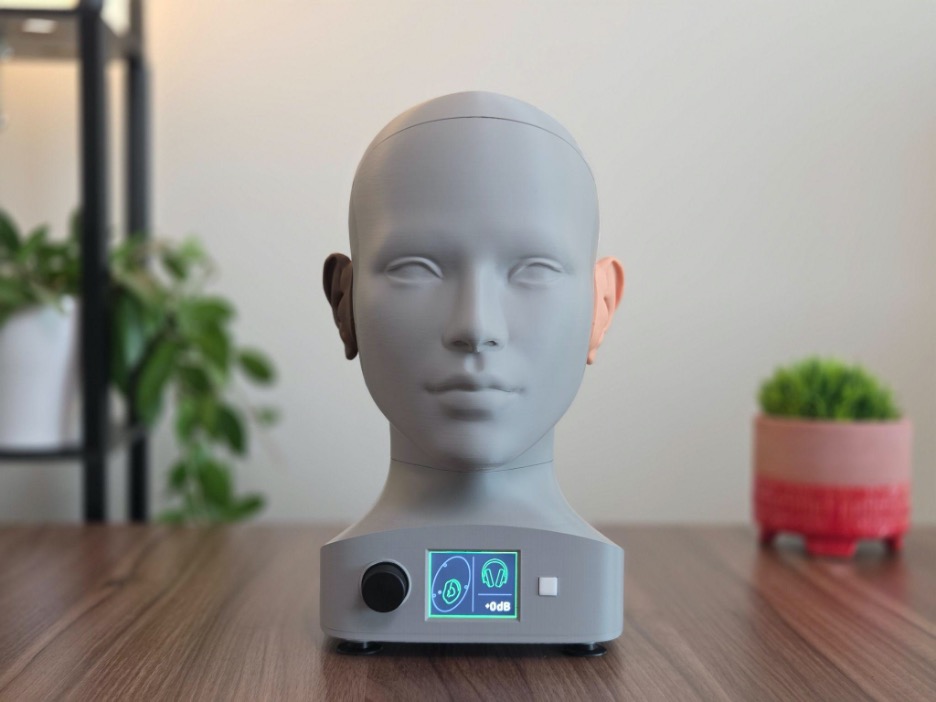
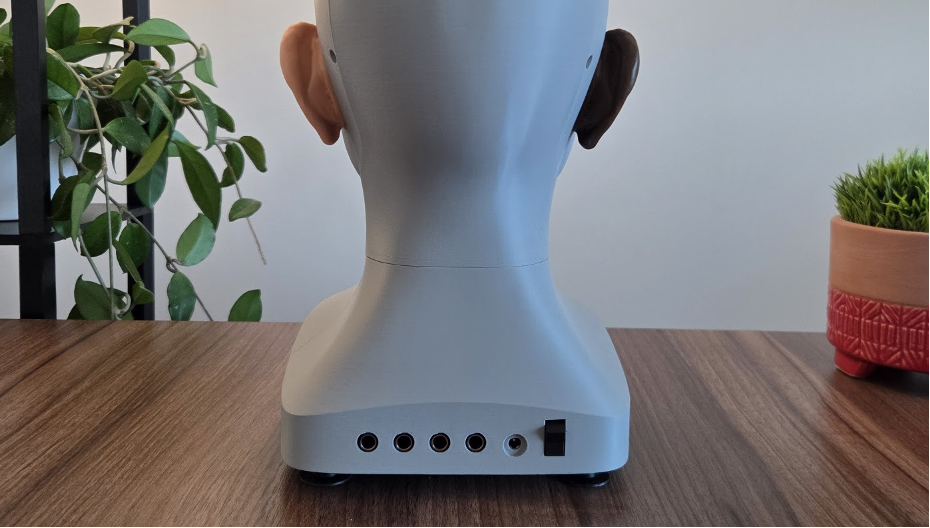
But… we need it to be simple! Why do we need to use a new piece of technology for demos when we can just put a hearing aid in the wearer’s ear right now? First is the extremely limited auditory memory that humans have. In the time between switching from one hearing aid on your own ear to another 15-30 seconds later, you will have forgotten what the initial hearing aid sounds like. With our ALEX model, you can run real-time A/B comparisons between two different sets of hearing aids (brand A vs B, high-tech level vs low-tech level, old model vs new model, etc.). You can also do A/B comparisons through the hearing aid vs open ears. Second, we know that succeeding with a hearing aid is not just about how you use it but how your family and support system helps you along the way. With ALEX, family members, support workers, or even the clinician can listen along at the same time and get an idea of what the hearing aid wearer is hearing and how the various features work.
So how can this be used to demonstrate various hearing aid features? While quite broad, there are three ways you could set up a sound demo depending on how fancy you would like your demos to be;
- ALEX on a desk in a quiet clinic room/waiting room. While this would not demonstrate some of the complex features of a hearing aid that require noise, you can still get familiar with the sound signature of the hearing aid, how you control it, what the app looks like, and how a family member’s voice may sound through the hearing aids.
- ALEX on a desk with a secondary sound source. This can be from a TV speaker you already have in the room, computer or phone speakers, or a Bluetooth speaker. You can play noise into the environment to demonstrate speech-in-noise features, including how directionality may work and how different devices take different approaches to speech enhancement.
- ALEX within a multi-speaker array. This is for the real keeners and would require at least 2-3 sound sources in a single room. These may be small speakers mounted on the wall/ceiling, multiple Bluetooth speakers paired together, or a typical surround-sound/home-theatre setup. This can help you introduce sound and speech from different directions and isolate particular ways the hearing aid functions and differentiates new features. You can also look to ‘simulate’ specific sound environments in which the patient may have difficulty (like Inventis does with their Symphonia sound environment creation - https://www.inventis.it/world/products/software-for-virtual-sound-environment-creation-symphonia).
These different setups for sound demos are not meant to overcomplicate things, but to give you a roadmap. The path to success is usually starting small and building upon early results, so don’t overcomplicate things and start as simple as you can!
In the past few months, we have been touring the world, talking to various people in (and out) of the industry, and giving them new sound experiences with hearing aids. The results have been quite profound. Here are a couple of moments we’ve captured over the last few months during our field testing and ALEX hearing aid demos.
- Put a pair of hearing aids on ALEX and let general consumers/public/non-hearing aid wearers listen to what hearing aids sound like. Their response after listening to these hearing aids applying mild gain? “Those don’t sound that weird!” “Streaming music actually sounds great!” “I didn’t know you could customize it on your phone!” What would happen if we could provide this experience to more and more people and ‘demystify’ hearing devices? People are so familiar with earbuds and airpods these days, why don’t we show them how great hearing aids can be too.
- We ran a session with current practicing clinicians who distribute most of the major brands in a private practice today. We spent a couple of hours putting their actual demo hearing aids on ALEX, comparing the features and functionality of the hearing aid brands, and running A/B tests. They gained a new appreciation for the hearing aids they dispense, have a new language for communicating the differences between brands to patients, and can adapt their clinical workflow to a more collaborative approach to get patients comfortable with their options and the hearing aids. Instead of explaining how the hearing aids work, we can show them!
- We had a hearing aid manufacturer representative put two different levels of their technology on the ALEX demonstrator, then had them close their eyes and guess which hearing aid was the high-technology level and which was the low-technology level as we switched back and forth. Risky situation! The reality is that it was quite clear from the beginning which was which, and this reinforces, not undermines, our recommendations in the clinic.
- A hearing aid user puts their exact hearing aids on the model and compares them to a new pair that fit slightly differently. What would an open fit vs a closed fit sound like? Can I try different settings on the new hearing aid and go back and forth between my old and new hearing aids to see how I like it?
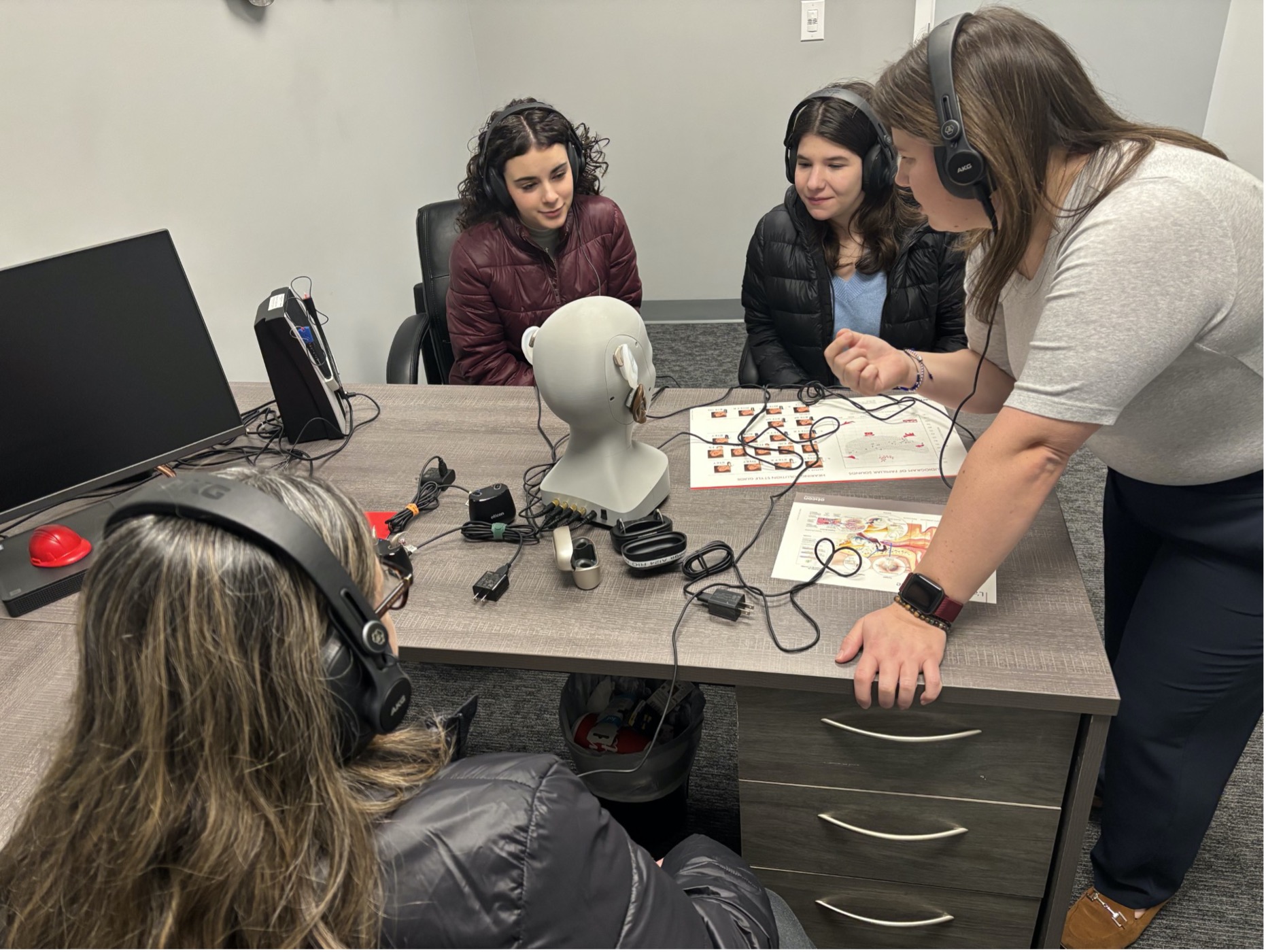
All of these examples are of a ‘collaborative tool and environment’ where we could experiment with different technologies, follow curiosity and explore what is possible. As in the consumer world, people like to try things on, test a new interface, and understand the product before committing. While a hearing aid is still a medical device, supporting these consumer inclinations and helping people become comfortable with this technology can drive positive results for the end user and the clinic. If this sounds way too much to include in an already restricted-for-time appointment, this can be done at local community events or open houses, in the waiting room with the assistance of a patient care coordinator, or several other places if we really believe in the benefits of enabling more people to listen to more hearing aids. This allows people to try before they buy and lets you update the demo, settings, and comparisons as technology evolves over time.
Does this mean we throw our clinical best practice out the window and proclaim “Job well done!” as soon as the patient is happy with the demo? Of course not! These demos are meant to reinforce the clinical work and further justify the clinician’s knowledge and value, not render that work unimportant.
And notice; were any of the experiences above commenting on how a particular complex hearing aid algorithm compared to another technology? It certainly could be, but that’s not where to start! We are not trying to teach hearing aid users to bring out their hearing aids only in noisy environments. We are trying to educate wearers to wear them as much as possible, so that in noisy, difficult environments they will be so used to them that they will excel. Listening in a quieter, more controlled environment (with potentially a speaker or two) is likely a better first step than a fully developed scene simulation of a restaurant, anyways.
As we’ve seen with OTC hearing aids and the recent Apple AirPods with hearing aid functionality, more people listening to hearing aids and more people aware of their hearing health will only generate more learning, awareness, and people seeking professional help. So ask yourself and your colleagues: how can we encourage more people (clinicians, patients, family members, and the general public) to have real-world experiences with this amazing technology we work with every day?
References
- Poost-Foroosh, L., Jennings, M.B., & Cheesman, M.F. (2015). Comparisons of client and clinician views of the importance of factors in client-clinician interaction in hearing aid purchase decisions. J Am Acad Audiol. 26(3):247-259. doi:10.3766/jaaa.26.3.5
- AHead Simulations: www.aheadsimulations.com
- Miller, G.E. (1990). The assessment of clinical skills/competence/performance. Acad Med. 65(9 suppl):S63-S67. doi:10.1097/00001888-199009000-00045
- Inventis Symphonia: https://www.inventis.it/world/products/software-for-virtual-sound-environment-creation-symphonia