
Diabetes and Hearing Loss: Implications for Comprehensive Audiological Care


What’s the Connection?
Diabetes mellitus is a group of metabolic disorders characterized by chronic hyperglycemiaresulting from impaired insulin secretion, insulin action, or both. The most common forms are Type 1, an autoimmune condition resulting in loss of insulin-producing pancreatic cells, and Type 2 diabetes, characterized by an impaired ability to produce insulin and/or use insulin effectively (American Diabetes Association Professional Practice Committee, 2024a). Diabetes is widely recognized for its effects on the vascular and nervous systems and its association with complications such as retinopathy, neuropathy, nephropathy, and cardiovascular disease. However, its potential impact on hearing and balance is less widely recognized (Islam et al., 2025; Public Health Agency of Canada, 2019). Growing evidence demonstrates an association between diabetes and dysfunction of the auditory and vestibular systems, suggesting the hearing and balance systems should be considered within the broader spectrum of diabetes-related health concerns. Diabetes has been associated with changes in both peripheral and central auditory pathways (Caballero-Borrego & Andujar-Lara, 2025; Jain et al., 2025; Mittal et al., 2024). Proposed mechanisms of association include cochlear microangiopathy, oxidative stress, and neuropathy (Kim et al., 2025; Mittal et al., 2024; Williams & Rubio, 2024). These mechanisms may contribute to gradual auditory changes that individuals may not initially perceive as hearing difficulties. Despite this growing evidence, hearing health is not routinely incorporated into diabetes monitoring, creating an important opportunity for audiologists to contribute to earlier identification and ongoing management of hearing health.
What are the Facts?
- Diabetes is a significant risk factor for the development of hearing impairment
- Individuals living with diabetes may experience hearing loss at an earlier age
- Hearing loss is twice as prevalent among people with diabetes compared to those without, even after adjusting for age and other risk factors for hearing loss
- Diabetes has been diagnosed in approximately 11% of Canadian adults
- Nearly 1 in 4 adults living with diabetes has a moderate-to-severe hearing loss (≥40 dB HL)
- Individuals living with diabetes are more than four times as likely to develop hearing loss as those without diabetes, with hearing loss predominantly affecting the higher frequencies
Note: Information is supported by the following sources: (American Diabetes Association Professional Practice Committee, 2024b; Caballero-Borrego & Andujar-Lara, 2025; Nisar et al., 2026; Public Health Agency of Canada, 2019; Samocha-Bonet et al., 2021; Spankovich et al., 2019).
Identifying the Knowledge-to-Practice Gaps
Undiagnosed and untreated hearing loss extends beyond sensory impairment and can adversely affect communication and participation in daily activities, contributing to social isolation, loneliness, and reduced quality of life (Strutt et al., 2022; World Health Organization [WHO], 2024). As the Canadian population continues to age and grow, the prevalence of diabetes and its associated personal, societal, and healthcare costs are expected to increase (Public Health Agency of Canada, 2008). These challenges underscore the need to identify effective resources, strategies, and care models to support the early identification, monitoring, and management of hearing loss among individuals living with diabetes across the lifespan.
The importance of hearing health for people living with diabetes is increasingly recognized. Diabetes Canada (2021) identifies hearing loss as a potential complication of diabetes, and the WHO (2021a) has advocated for hearing screening in this population. Despite growing recognition of the association between diabetes and hearing loss, awareness among people living with diabetes and healthcare providers remains an important foundation for translating this evidence into practice. Education is needed to increase understanding of the potential impact of diabetes on hearing health, support recognition of hearing, communication, and balance concerns, and clarify when further assessment or referral may be warranted. Audiologists have an important role in addressing this knowledge-to-practice gap by raising awareness among patients, families, and other healthcare providers about hearing health, the relationship between diabetes and hearing health, the potential impact of diabetes on hearing, and the value of earlier identification.
Beyond awareness and education, however, there is limited guidance on incorporating hearing health into routine diabetes care. A comprehensive, evidence-informed approach to address this gap remains lacking. Greater clarity is needed regarding when and how hearing should be assessed, which measures are appropriate, when reassessment may be warranted, and when to refer for further evaluation and management. Importantly, addressing hearing health in diabetes requires coordination across care settings, with audiologists, diabetes care providers, and other health professionals contributing to awareness, identification, referral, and ongoing care.
Our research team conducted a scoping review to synthesize current evidence on the identification and assessment of hearing loss among adults with diabetes. This work identified priorities to inform a more comprehensive approach to hearing health in diabetes, encompassing awareness and education, earlier identification and referral, and coordinated care across disciplines and settings.
Six Decades of Evidence
In total, 201 adult-focused studies were included in the review (Malheiro et al., 2026). The included articles’ year of publication ranged from 1974 to 2026. An overview of the key findings of the scoping review includes:
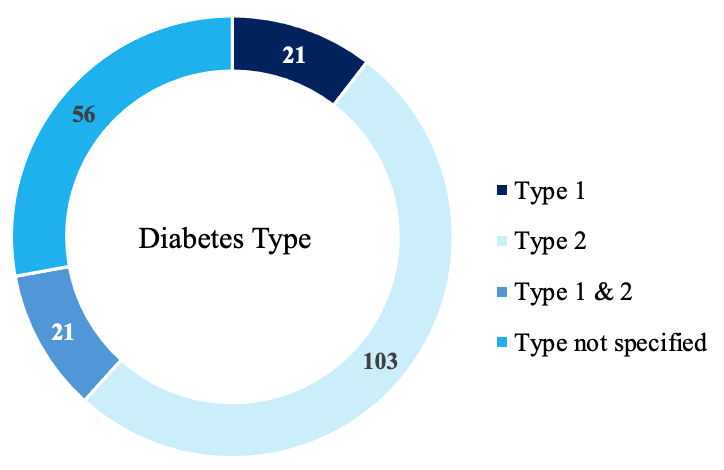
1. Classification of Diabetes:
- Type 2 diabetes was the most reported type of diabetes diagnosed
2. Professionals Involved in Hearing Loss Identification:
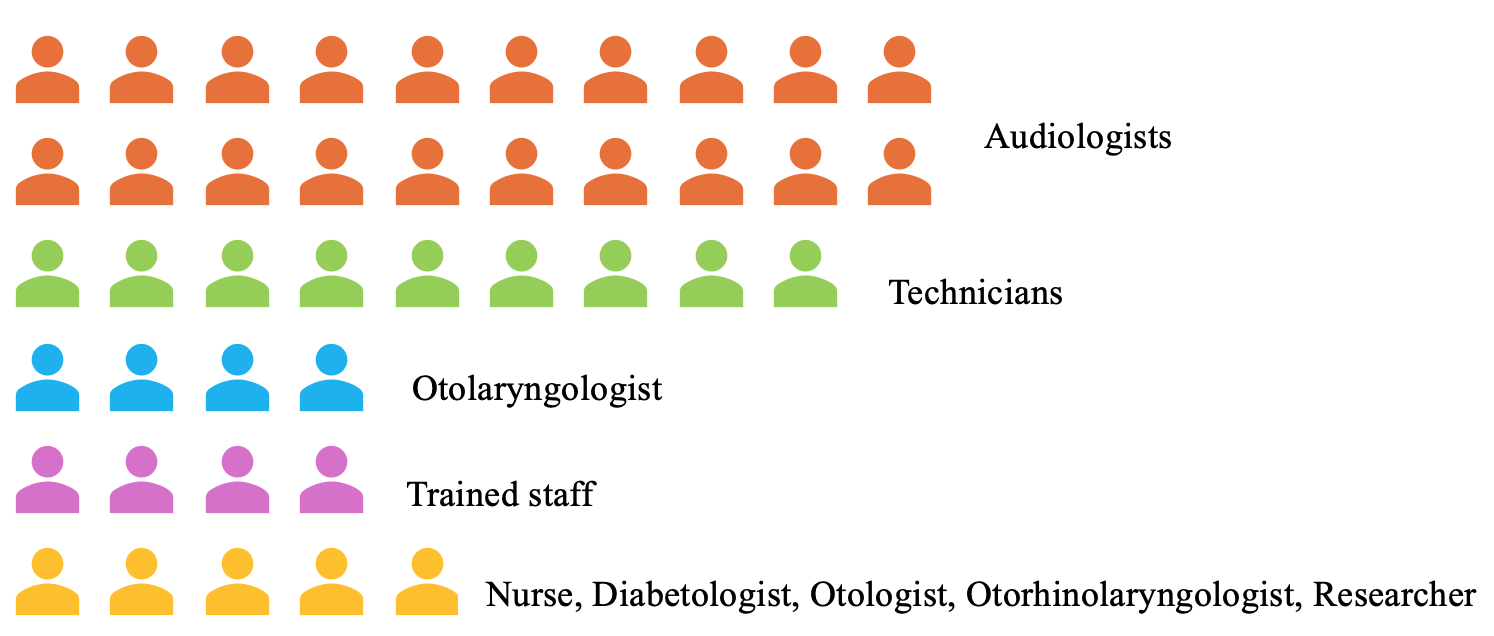
- Only 20% of studies reported the professionals involved in identifying hearing loss
- Among these, audiologists were most frequently identified, with additional involvement from nurses, technicians, otolaryngologists and other physicians, researchers, and trained personnel
- Although additional professionals were sometimes involved in patient care, their specific roles across the care journey were rarely articulated
3. Professional Settings Involved in Hearing Loss Identification:
- The professional settings involved in hearing loss identification were often reported at a broad departmental level, lacking contextual detail
- More than half of the studies took place in a hospital setting
- Additional locations included audiology clinics, diabetes-specific settings, outpatient clinics, community-based settings, academic institutions, and within the research study

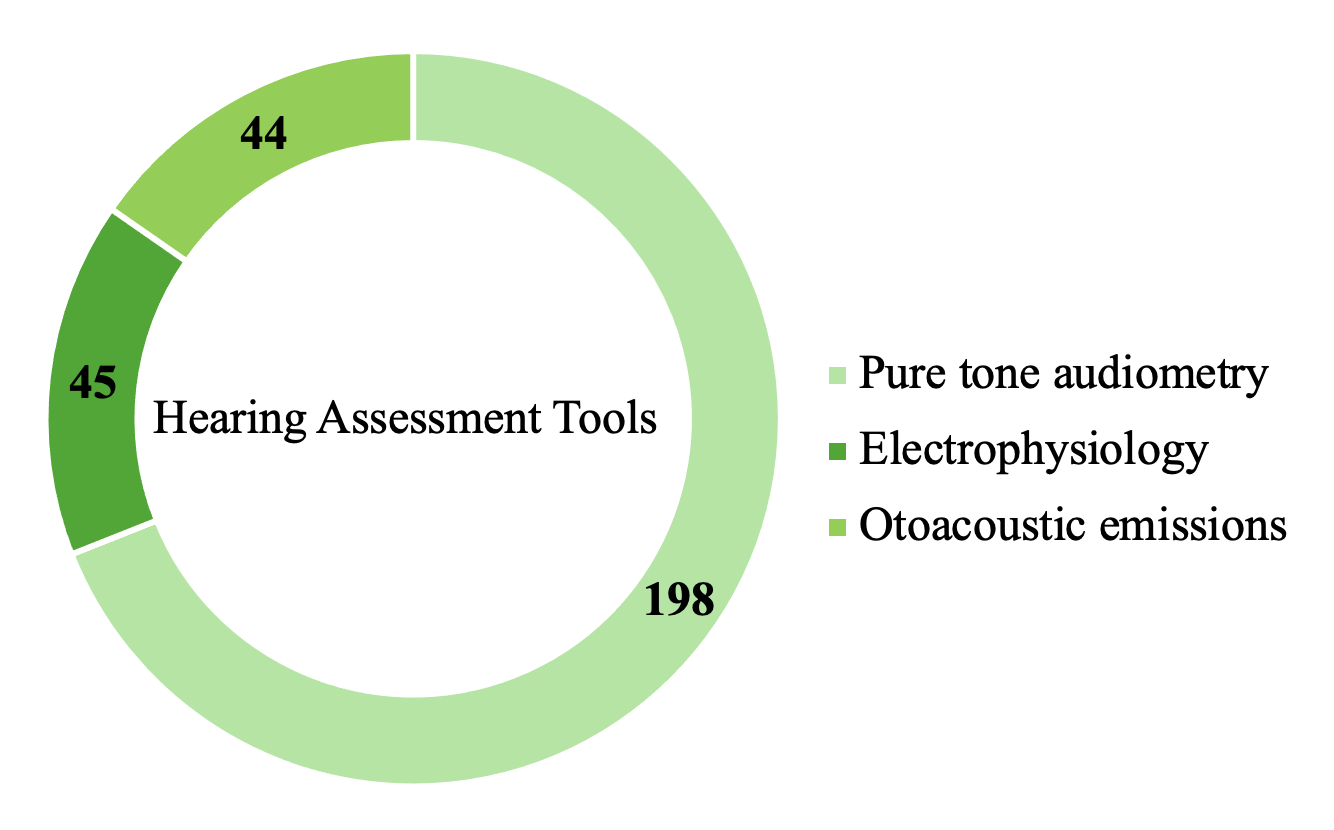
Hearing Assessment Tools:
Pure Tone Audiometry
- Almost all studies used audiometric pure tone testing to diagnose hearing loss
- Findings indicated that diabetes is commonly associated with high-frequency hearing loss, suggesting a potential role for extended high-frequency audiometry in detecting early auditory changes
- A smaller proportion of studies also report involvement of low-to-mid frequencies
Electrophysiology
- Auditory Brainstem Response (ABR) measurements and cortical testing paradigms were used as measures of neurological functioning (not to assess thresholds)
- Many studies reported prolonged electrophysiological response latencies among individuals with diabetes compared with controls
Otoacoustic Emission (OAE) Measures
- OAE measurements provided information about cochlear function and were sensitive to amplitude differences between individuals with diabetes and the control group
Collectively, these findings suggest that diabetes-associated auditory changes may extend beyond conventional pure-tone thresholds and may involve cochlear and neural auditory function. However, further evidence is needed to determine the clinical utility of these measures for routine assessment or longitudinal follow-up.
Recommendations:
- There was substantial variability in recommendations for diagnostic assessments and referral to hearing healthcare services
- Less than half of the studies reported recommendations; these included: audiological screening, early referral, follow-up hearing assessment, metabolic assessment, early intervention, risk reduction, preventative care, and collaborative healthcare efforts
- The inclusion of sensitive audiological measures, where appropriate, to establish baseline auditory function and support the detection of subclinical and longitudinal auditory changes in individuals with diabetes.
From Evidence to Better Hearing Health
Despite growing evidence linking diabetes and hearing loss, limited guidance exists on incorporating hearing health into the care of adults living with diabetes, including approaches to education, identification, assessment, follow-up, referral, and management. Our findings demonstrate substantial variability in approaches and reporting, highlighting the need for more consistent, evidence-informed approaches to hearing healthcare for adults living with diabetes. Clear referral processes and defined roles may strengthen interdisciplinary collaboration and support more integrated models of care. Integrating audiology services within and/or extending from diabetes care teams presents an important opportunity to enhance coordinated, comprehensive care for people living with diabetes and hearing loss. Incorporating routine hearing assessments into established diabetes management pathways may support earlier identification of hearing loss and timely access to appropriate care.
Hearing Health: A Shared Responsibility
The relationship between diabetes and hearing health supports a coordinated approach that considers hearing alongside other aspects of diabetes care. Diabetes care providers can increase awareness of hearing and balance health, identify individuals experiencing hearing, communication, or balance concerns, and incorporate appropriate screening and referral into routine care. Audiologists, in turn, provide expertise in assessing and managing hearing and balance concerns and may identify broader health concerns that warrant referral to other healthcare providers (WHO, 2021b). This shared responsibility creates opportunities for more integrated, potentially bidirectional referral pathways between diabetes and hearing healthcare. A stepped hearing healthcare pathway, progressing from awareness and early identification to assessment, follow-up, and management based on individual need, may support the integration of hearing health within diabetes care. This is particularly important because hearing loss may both occur alongside diabetes and affect communication and participation in chronic disease management. Difficulties hearing and communicating with healthcare providers may limit access to education, shared decision-making, and the timely identification of other health concerns (Lu et al., 2024; Marlow et al., 2017). Integrating hearing health into routine diabetes care may therefore support earlier identification of hearing loss, improve access to appropriate interventions, and strengthen communication and participation in care, ultimately contributing to better health and quality of life outcomes for individuals living with diabetes (Nisar et al., 2026).
Future research should aim to establish and evaluate person-centred hearing healthcare pathways across diverse diabetes care settings, supported by evidence-informed assessment, referral, follow-up, and implementation strategies. This call to action supports moving beyond reactive approaches that address hearing concerns only after they emerge toward greater awareness, earlier identification, appropriate follow-up, and timely referral. Greater integration of audiology into interdisciplinary diabetes management will be essential to developing coordinated models that support earlier identification and comprehensive hearing health management for people living with diabetes. Comprehensive audiological care in diabetes management could look like:

Our research team is conducting research in Canada to advance the integration of hearing health into diabetes care and establish a foundation for more comprehensive, coordinated care for people living with diabetes. Through this work, we aim to strengthen awareness and education, support earlier identification and referral, and clarify opportunities to integrate hearing health across care settings. We welcome opportunities to connect and collaborate with audiologists, diabetes care providers, researchers, people with lived experience, and other partners interested in advancing hearing health as part of comprehensive diabetes care.
Follow-ups for Monday Morning…
- Ask about diabetes as part of routine case history and consider it within the broader hearing health risk profile.
- Include questions about balance or vestibular concerns that may warrant further assessment or referral.
- Educate patients with diabetes about the potential association between diabetes and hearing and balance health, including symptoms that warrant attention.
- Consider establishing a baseline of auditory function and, where clinically appropriate, using sensitive measures to assess changes over time.
- Establish referral and communication pathways with primary care and diabetes care providers to support coordinated patient care.
References
- American Diabetes Association Professional Practice Committee. (2024a). 2. Diagnosis and classification of diabetes: Standards of care in diabetes—2025. Diabetes Care, 48(Supplement_1), S27–S49. https://doi.org/10.2337/dc25-S002
- American Diabetes Association Professional Practice Committee. (2024b). 4. Comprehensive medical evaluation and assessment of comorbidities: Standards of care in diabetes—2025. Diabetes Care, 48(Supplement_1), S59–S85. https://doi.org/10.2337/dc25-S004
- Caballero-Borrego, M., & Andujar-Lara, I. (2025). Type 2 diabetes mellitus and hearing loss: A PRISMA systematic review and meta-analysis. Otolaryngology-Head and Neck Surgery, 173(5), 1041–1053. https://doi.org/10.1002/ohn.1346
- Diabetes Canada. (2021, May 12). Hearing Loss & Diabetes [Webinar]. https://www.youtube.com/watch?v=rzMzmeLMC5w
- Islam, K., Islam, R., Nguyen, I., Malik, H., Pirzadah, H., Shrestha, B., Lentz, I. B., Shekoohi, S., & Kaye, A. D. (2025). Diabetes mellitus and associated vascular disease: Pathogenesis, complications, and evolving treatments. Advances in Therapy, 42(6), 2659–2678. https://doi.org/10.1007/s12325-025-03185-9
- Jain, S., Chetak, J., Singh, S., & Varsha Chowdri, N. (2025). The impact of type 1 diabetes mellitus on hearing function in children: A systematic review. International Journal of Pediatric Otorhinolaryngology, 196. https://doi.org/https://doi.org/10.1016/j.ijporl.2025.112476
- Kim, C. H.-S., Lauritsen, K. L., Nguyen, S. A., Meyer, T. A., Cumpston, E. C., Pelic, J., & Labadie, R. (2025). Characteristics of hearing loss in type 2 diabetes mellitus: A systematic review and meta-analysis. Otolaryngology-Head and Neck Surgery, 173(6), 1317–1327. https://doi.org/10.1002/ohn.1378
- Lu, L. L. M., Henn, P., O’Tuathaigh, C., & Smith, S. (2024). Patient-healthcare provider communication and age-related hearing loss: A qualitative study of patients’ perspectives. Irish Journal of Medical Science, 193(1), 277–284. https://doi.org/10.1007/s11845-023-03432-4
- Malheiro, G., Meston, C., Allan, C., Bataineh, J. N., Kapoor, P., O’Hagan, R., & Glista, D. (2026). Hearing health monitoring in adults living with diabetes: A scoping review to inform integrated care pathways. Audiology Research.
- Marlow, N. M., Malaty, J., Jo, A., Tanner, R. J., Beau De Rochars, V. M., Carek, P. J., & Mainous, A. G. (2017). Hearing impairment and undiagnosed disease: The potential role of clinical recommendations. Journal of Speech, Language, and Hearing Research, 60(1), 231–237. https://doi.org/10.1044/2016_JSLHR-H-15-0373
- Mittal, R., McKenna, K., Keith, G., Lemos, J. R. N., Mittal, J., & Hirani, K. (2024). A systematic review of the association of Type I diabetes with sensorineural hearing loss. PLOS ONE, 19(2), e0298457. https://doi.org/10.1371/journal.pone.0298457
- Nisar, M., Karatela, S., Rajagopal, A., Ahmed, B. N., & Dawes, P. (2026). Hearing loss in adults with diabetes and prediabetes: A systematic review and meta‐analysis. Diabetes/Metabolism Research and Reviews. https://doi.org/10.1002/dmrr.70195
- Public Health Agency of Canada. (2008, November 14). Diabetes: Overview. https://www.canada.ca/en/public-health/services/diseases/diabetes.html
- Public Health Agency of Canada. (2019). Diabetes in Canada [Data Blog]. Government of Canada. https://health-infobase.canada.ca/datalab/diabetes-blog.html
- Samocha-Bonet, D., Wu, B., & Ryugo, D. K. (2021). Diabetes mellitus and hearing loss: A review. Ageing Research Reviews, 71, 101423. https://doi.org/10.1016/j.arr.2021.101423
- Spankovich, C., Long, G. R., & Hood, L. J. (2019). Early indices of reduced cochlear function in young adults with type-1 diabetes revealed by DPOAE fine structure. Journal of the American Academy of Audiology, 30(6), 459–471.
- Strutt, P. A., Barnier, A. J., Savage, G., Picard, G., Kochan, N. A., Sachdev, P., Draper, B., & Brodaty, H. (2022). Hearing loss, cognition, and risk of neurocognitive disorder: Evidence from a longitudinal cohort study of older adult Australians. Aging, Neuropsychology, and Cognition, 29(1), 121–138. https://doi.org/10.1080/13825585.2020.1857328
- Williams, E. D., & Rubio, M. E. (2024). Associations between diabetes mellitus and sensorineural hearing loss from humans and animal studies. Hearing Research, 450, 109072. https://doi.org/10.1016/j.heares.2024.109072
- World Health Organization. (2021a). Hearing screening: Considerations for implementation. https://www.who.int/publications/i/item/9789240032767
- World Health Organization. (2021b). World report on hearing. World Health Organization. https://apps.who.int/iris/handle/10665/339913
- World Health Organization. (2024). Deafness and hearing loss. World Health Organization. https://www.who.int/news-room/fact-sheets/detail/deafness-and-hearing-loss