
Sound Business Sense



Strategic Business Planning Part IV
In our formal business planning process, recall in Issue 3 the discussion ended with the Practice Overview section and a cursory list of Market Assessment considerations. At that point, we covered about 40% of the topics necessary in a formal business plan (bolded).
- Executive Summary
- Table of Contents
- Mission & Vision
- Practice Overview
- Market Assessment
- Competition Analysis
- Personnel/Human Resources
- Operational Plan
- Financial Components
- Appendix

As we move into the market assessment section, Parsons (2026) identified five critical points for reviewing the market: Industry Overview, Target Market, Competition, Pricing, and Forecast. Note that Competition is a component of assessing the Market, therefore it will be discussed in this Part IV edition. Pricing and Forecasting are part of the Financial Section to be discussed later in this series.
MARKET ASSESSMENT AND ANALYSIS
Industry Overview
Generally, prospective funders for audiology practices know very little, if anything, about the hearing industry. The purpose of the market assessment and analysis section is not only to sell stakeholders on the specifics of the proposed practice, but also to introduce the lender to the Canadian hearing industry and the profession’s future prospects, with special emphasis on private audiology practice.
This is the part of the plan that presents key industry-wide metrics, such as size, trends, and projected growth. It must include businesses that look like audiology clinics to consumers but are sales operations, such as big box stores, manufacturer sales outlets, traditional hearing aid dispensers, both Internet and brick-and-mortar over-the-counter operations, as well as direct-to-consumer product sales. Valuable sources for this information include government data, websites, ads, market communications from various national competitors, audiology journals, podcasts, LinkedIn and other media sites, as well as the online census and national healthcare data.
Data from professional associations show the percentage of hearing loss and/or tinnitus in the population across age groups, which can be very helpful for estimating the number of patients who need services nationwide. While US data and citations from Windmill & Freeman (2017, 2019) are important here, as they document the number of patients requiring hearing care in the US through 2050 and their significant comorbidities.
National market forecasts begin with the percentage change in the total number of possible product and service purchasers and the projected change in purchase patterns over the next three to five years. In some instances, however, not all information required for business planning is readily available or public. It may be necessary to dig deeply into the literature and online sources, or purchase very expensive information from private marketing groups, to obtain the detail required for conservative forecasts to impress some lenders. Use of this contemporary online data will demonstrate to funding stakeholders not only an increasing market for audiology products and services, but also that prospective business owners are incorporating the latest, most accurate data into their business forecasts.
Target Market
Once the investors are oriented to the national hearing industry market, it is necessary to discuss the specific market within the community or region the prospective practice will serve. Local market needs are computed by applying the national percentages of individuals with hearing loss and balance issues to the local population data. Once the expected market is established, the specific target segmentations can be included in the business plan to further define the number of patients expected to support the practice. Four market segmentations can be used to define the local market:
- Geographic Segmentation is the first consideration as it defines the specific area the practice serves. If the business serves a rural population, it may be necessary to expand the service area to attract sufficient clientele to support the practice. An urban practice will not require a large geographical area, as cities are more densely populated, offering more clientele to support the practice. This is a critical calculation for the business plan as it considers the number of consumers served.

- Demographic Segmentation considers age, income, race, family size, occupation, generation, family life cycle, education, nationality, gender, and social class. Within these segments, a case can be made for various services offered by the new practice. Demographics of the market area are particularly influential to stakeholders when they match a needed component of the population within the market area.
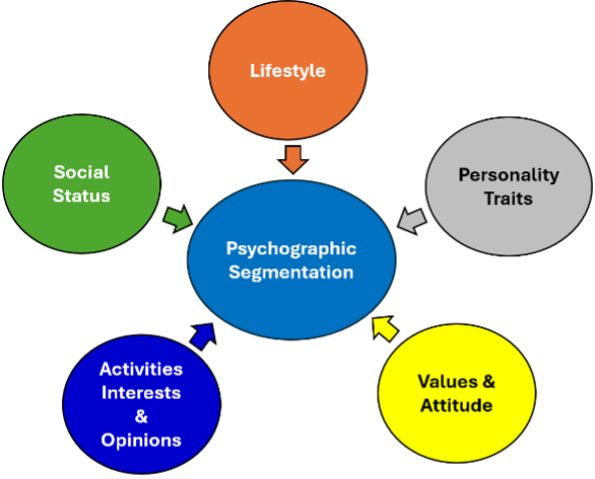
- Psychographic Segmentation refers to the mindset of the practice’s proposed clientele. A description of their needs and how they will possibly react to this type of audiology practice in their community should be provided. Thissegmentation of the local market may provide business planning data on values, lifestyle, social status, activities, recreational interests, opinions, and personality traits.

- Behavioral Segmentation involves the language and culture of prospective patients. Some communities communicate in their native language and practice their cultural customs. Some unique population areas require marketing with linguistic and cultural sensitivity; therefore, a clinic that can provide hearing care in multiple languages could have an edge over the competition.
The inclusion of targeted marketing in the business plan will demonstrate to a lender that the potential practice owners are familiar with the diversities of their prospective market.
Competition
Understanding the competition is critically important to a new or existing practice business plan. It is essential to the creation and execution of a coherent strategy. It should convey to stakeholders a comprehensive understanding of how the practice or expansion intends to compete in the market. The business plan needs to provide insights into how an analysis of the competition fuels the development of a strategy that answers what, why, and how the new business will attack competitors. In short, a strategy is nothing more than a plan for how to stand out among competitors and what makes the proposed practice or expansion a better choice for consumers.
Porter (1980) offers four generic strategies: one to be avoided at all costs, and the other three are viable alternatives for newly established clinics to deal with competitive forces. These are: Stuck-In-The-Middle, Cost Leadership, Focus, and Differentiation.
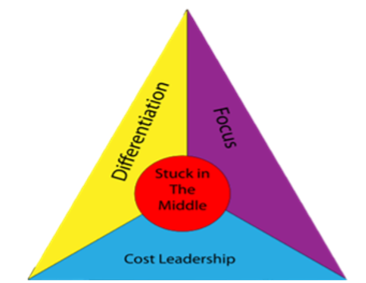
- Stuck-In-The-Middle is a non-strategy that essentially guarantees low profitability. These clinics either lose the high-volume patients who demand low prices or must bid away profits to get business away from other low-cost clinics. Simultaneously, these clinics also lose business to clinics that focus on high-margin patients and to those that have found a way to differentiate (stand out) in the market. These issues virtually ensure the business will not be successful. A practice strategy that ends up stuck in the middle demonstrates that the owner has not done enough due diligence to understand how the business works within the local community. Stakeholders do not fund business plans that lack a creative, strategic plan for dealing with competition.
- Cost Leadership is a strategy that some clinics have successfully implemented. It is based on offering the lowest-cost products and services in the marketplace. If you are not going to be a multi-location practice, it is not the recommended approach as cost leadership is difficult to maintain. When product costs decline and resulting volumes increase, these cost reductions are not automatic and require negotiation. Further, unless the practice has multiple locations, these negotiations may not be fruitful. In the event that there is a possibility of negotiating a low-cost deal, low-cost strategies are difficult to maintain due to technological changes, inflation, rising business costs, and marketing costs to ensure the necessary volume of patients.
- Focus is the emphasis on a particular buyer group, product line segment, or geographic market, which can take many forms. The entire focus strategy for confronting competition centers on a specific target population. For an audiology clinic, a focus strategy emphasizes particular audiological products or services, such as tinnitus treatment, vestibular assessment and rehabilitation, hearing conservation, or the sale of hearing devices. The focus for the target population may also include staff and their interaction capabilities, equipment and technology, and the impression the patient has when they enter the clinic. A focus strategy must be explained and justified based on market data and the execution plan.
- Differentiation provides insulation against competitive rivalry through patient brand loyalty and lowers consumers’ pricing sensitivity. This competitive strategy yields higher margins, enabling the clinic to mitigate buyer comparisons with other clinics. The differentiation details will need to be spelled out in the plan to introduce stakeholders to the practice’s uniqueness relative to the competition. Differentiation can take many forms, such as offering services that are not available anywhere else in the market. These may include tinnitus treatment, vestibular services, extended high frequency audiometric assessment, objective audiometry, and telehealth. Often differentiation and focus strategies are combined to provide an extraordinary experience.
Next time our Sound Business Sense topic will be the critical Human Resources section and how to present it in a business plan.
References
- Parsons, N. (2026). How to conduct a market analysis in 4 steps – 2026 guide. Retrieved July 22, 2026.
- Porter, M. (1980). Competitive Strategy: Techniques for Analyzing Industries and Competitors. New York, NY: The Free Press
- Taylor, B., Evertz, A., Traynor, R. (2026). Chapter 4 - Strategic Business Planning. In Strategic Practice Management, 4th Edition, (Traynor, RM & Taylor B., Eds.) San Diego, CA: Plural Publishing.
- Traynor, RM, Taylor, B., Fitzgerald, N., Liebe, K., (2026). Figures- Chapter 12. In Strategic Practice Management, 4th Edition, (Traynor, RM & Taylor B., Eds.) San Diego, CA: Plural Publishing.
- Windmill, I. & Freeman, B. (2019). Medicare, Hearing Care, and Audiology: Data driven perspectives. Audiology Today, 31(2), pp. 18-26. Retrieved July 22, 2026.
- Windmill, I. & Freeman, B. (2017). Projected change in Medicare Enrollment 2000-2050. Paper Presented to the American Academy of Audiology, Columbus, OH. Now published by the American Academy of Actuaries. Retrieved July 22, 2026.