
Book Review


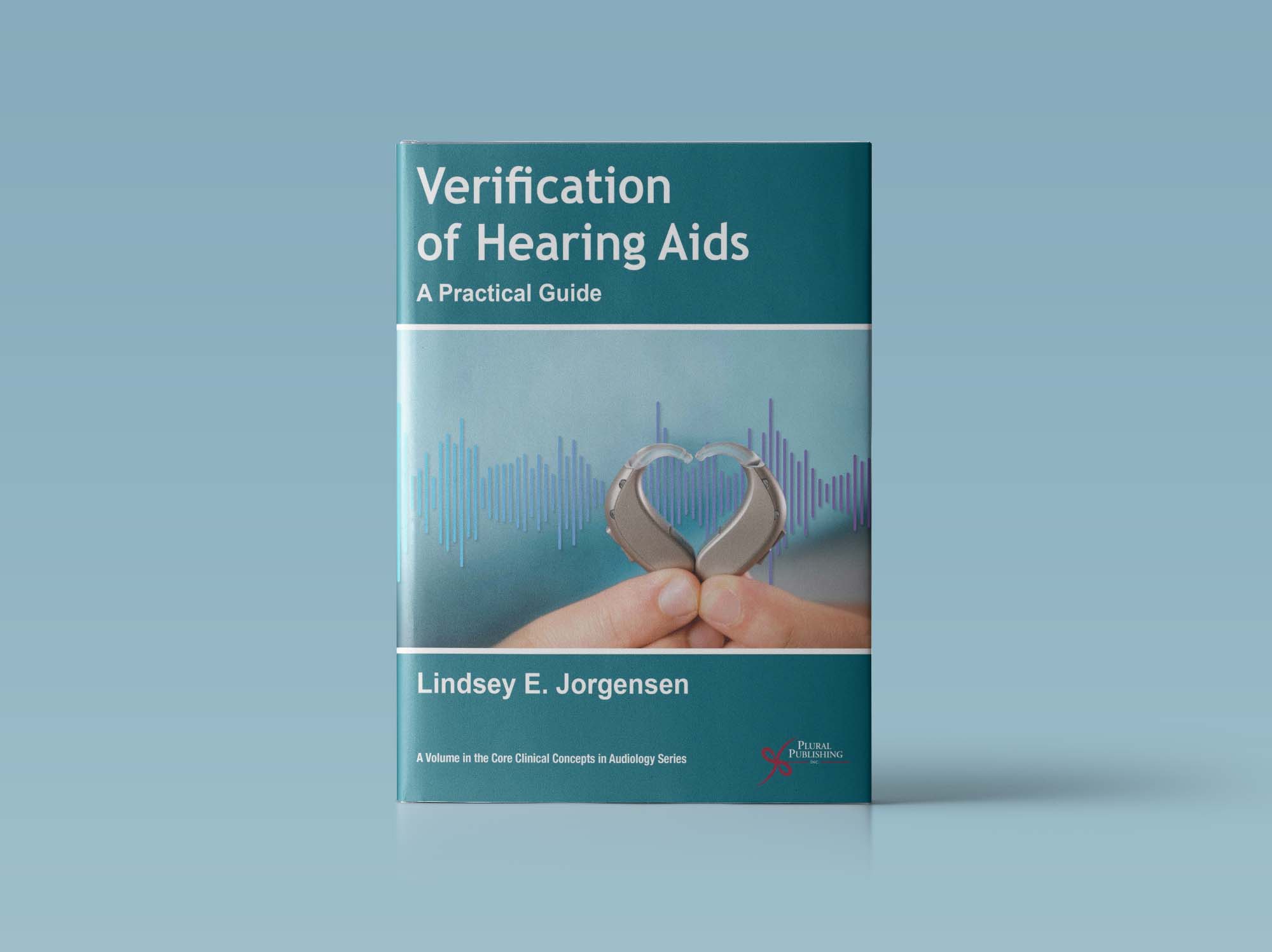
Verification of Hearing Aids – A Practical Guide
Lindsey E. Jorgensen, 2026, Plural Publishing, Inc. | ISBN#978-1-63550-882-6
Verification of Hearing Aids by Dr. Lindsey Jorgensen will not be on my bookshelf … gathering dust. This book will be in my clinical office, sitting next to my real-ear measurement system. The subtitle “a practical guide” is the strength of this book and sets it apart from some of the other books that have appeared in the past.
In addition to some important references, each chapter ends with a summary and key takeaways, sometimes called “wrapping up” or “troubleshooting and considerations” depending on the chapter. And most have a section on the “Monday Morning Checklist” to make sure the clinic is ready to go when the doors open.
Each chapter is packed with clinically relevant gems, case studies, and even a discussion of clinically relevant questions and issues. And like many books it goes from the general (earlier chapters) to the VERY specific in the later chapters.
Verification of Hearing Aids is aimed at four different groups and should be read differently depending on which group(s) you may belong to: (1) professors and instructors, (2) students, (3) practicing clinicians, and (4) clinic or practice owners. Since I am a student at heart and a practicing clinical audiologist, I read it with all four perspectives in mind, and I feel that any reader should take this approach.
Beginning with a broad focus, chapter 1 discusses the Foundation of Hearing Aid Verification, which serves as the cornerstone of best practices. Dr. Jorgensen distinguishes early on between verification- an object set of measures and validation- a subjective set of measures. Both of these, in conjunction, underscore a strength of the book: the importance of not only assessment but also counseling the patient and their family based on the results and impressions.
Chapters 2 and 3 also have wide foci- Hearing Aid Anatomy and Verification Tools, and Verification Methods in Clinical Practice, but both are replete with clinical examples and case studies.
Chapter 4 and 5 begin to focus on what needs to be measured and why in the clinic; Chapter 4, Check-in Procedure- ANSI/electro-acoustic analysis (with a nice summary in the Appendix), and Chapter 5, REAR/Simulated real ear measurements. The various acronyms and clear descriptions of each, according to ANSI S3.22 and the equivalent IEC60118, are discussed in detail, focusing on ANSI S3.22/IEC60118 as reporting (and not performance) standards and how these results may (or may not) compare with published manufacturer’s specifications. Case examples are provided for both adult and pediatric patients and special populations, showing how these may differ, especially in patients with closed ear canals.
Chapters 6, 7, and 8, deal with various hearing aid technologies such as directional microphones (chapter 6) to advanced algorithms such as noise reduction, feedback management, and frequency lowering, and how these can be assessed in the real ear (chapter 7), and in a hearing aid test box (chapter 8).
My favorite chapter is number 9- “What to do what and justifying the time/expense. This isn’t a chapter on “short cuts” but is a well-thought-out description of what is the most important to what can be put off until later. Clinics can be busy, and there may be only one real-ear measurement system in the office, even though several audiologists are working simultaneously with different patients. This chapter contains flowcharts and decision trees that can assist the student in transitioning from the classroom to the clinic. There are even case studies on “streamlined protocols”.
Chapter 11 has been written by another author, Dr. Coral Dirks who is an audiologist specializing in cochlear implants. I must admit to having to read (and re-read) this chapter several times- not because it was poorly written but because it was a wealth of information. I could imagine that this chapter alone would be sufficient as the only source of supplementary information for a course in cochlear implants- and if you read through all 72 references, it could be a graduate reading course in itself.
And Chapter 12 returns to Dr. Jorgensen’s strength- “Case studies”. In addition to the case studies and discussion in the earlier chapters, having all of this in one place is a great asset.
As I said earlier, do not buy this book to sit on your bookshelf; buy it to sit in your office beside your real ear measurement system.
Reviewed by Marshall Chasin, AuD.
Editor-in-Chief
CanadianAudiologist.ca
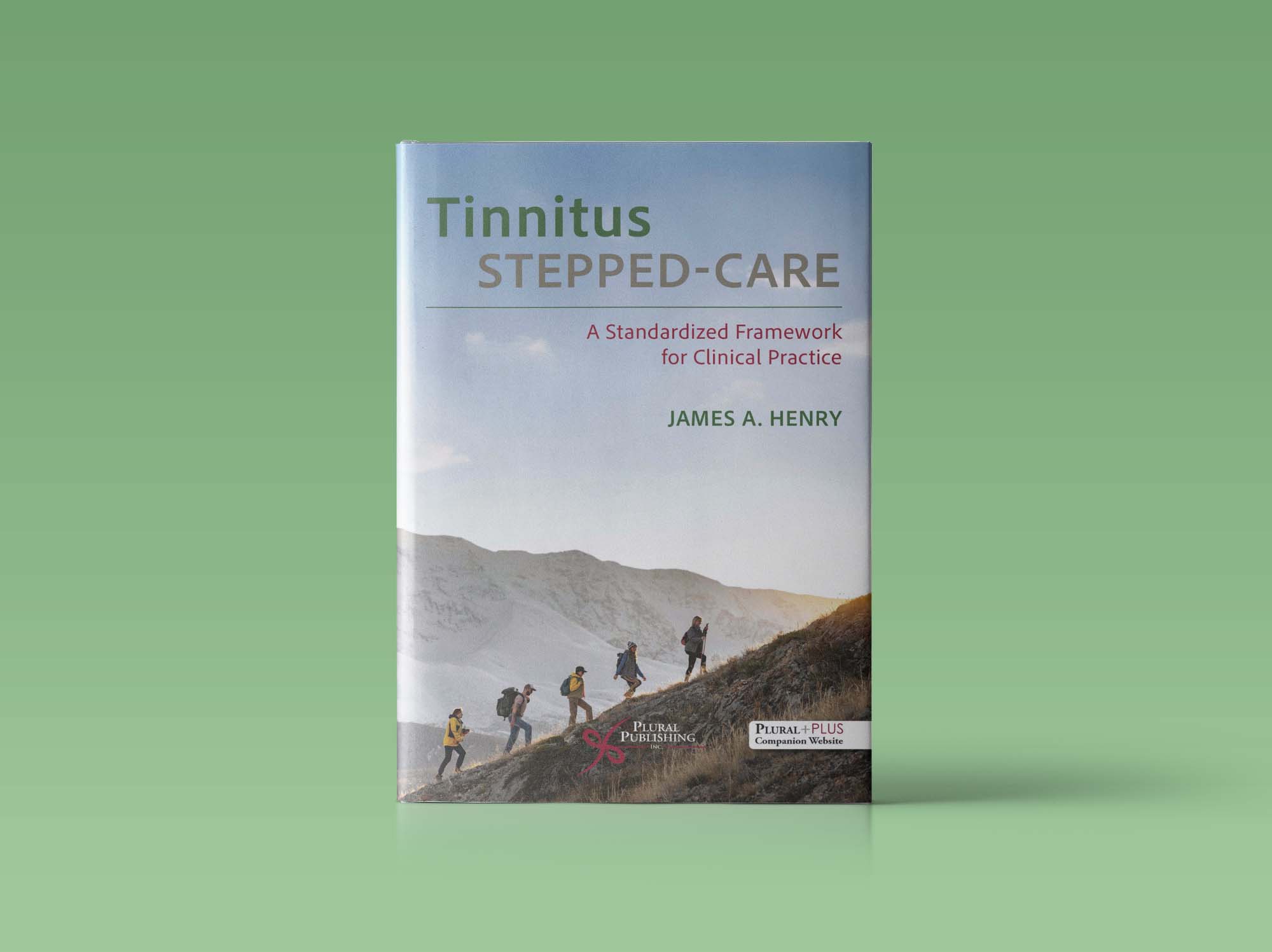
Tinnitus Stepped-Care: A Standardized Framework for Clinical Practice
James A. Henry | Details: 286 pages, B&W, Softcover, 6" x 9" | ISBN13: 978-1-63550-791-1
Dr. Henry writes a well-organized, clinician- and patient-centric book designed to support those who suffer from tinnitus. The book has 14 chapters, organized sequentially. The chapters progress from the basics of tinnitus, the issues facing both the sufferer and the clinician, to how to implement a clinical program. The highlights of the text are outlined below.
- The goal of Progressive Tinnitus Management (PTM) is, in simplest terms, for the patient to receive the care they require – thus Dr. Henry’s Stepped Care Model is designed to provide that care.
- Chapter 1 outlines the gaps and inconsistencies in training – the skills required to manage patients with tinnitus are extensive and require several distinct training programs, and most likely years of service, with management techniques and guidelines that are inconsistent or lack evidence. The statements in this chapter were simple, but resonant with the struggles the tinnitus management providing clinician faces.
- One of the very nice elements of the Tinnitus Stepped-Care approach is Dr. Henry’s retelling of the history of some of the developments in Tinnitus Management. Understanding where some tinnitus management concepts originated can help the clinician appreciate their current status. Dr. Henry’s book is well referenced to further guide the reader.
- The use of Dobie’s Tinnitus Pyramid should be in most training program. The simplification and classification help clinicians understand and support patients without over-recommending management options. As Dr. Henry notes, 80% of those with tinnitus are not bothered.
- By differentiating between bothersome and non-bothersome tinnitus, Dr. Henry provides the clinician with direction on management levels. Does the patient simply need to rule out any medical concerns? Is the tinnitus associated with a traumatic event? Is the tinnitus persistent, and does it naturally habituate over time? These questions are all discussed in the early chapters.
- The text examines all 5 Levels of PTM and provides examples of care, possible patient outcomes and tools that can be used for the patient.
- Chapter 5 outlines the stepped-care procedure and uses a table to outline the flow, care team, resources, and support. The importance of patient education and counseling is noted throughout the text, but appears to be significantly more intentional in the later chapters regarding the care program. Chapter 10 provides an overview of each evidence-based counseling technique. Each step of the Stepped-Care program has a separate chapter. Dr. Henry guides the reader through most if not all the decisions, tools, and management options for those who suffer from tinnitus. Dr. Henry provides further guidance, outlining the elements required in a tinnitus education session, which he suggests would last approximately 1 hour.
- An Audiology Services Decision Tree is provided in Chapter 7 – the guide is perfect for clinicians both new and trained. A review of many of the unique audiological conditions is provided, along with guidance. Additionally, the audiological assessment is discussed. The use, evidence, and value of many traditional audiologic and psychoacoustic measures are discussed.
- A wonderful overview of non-traditional forms of auditory dysfunction occurs in Chapter 8. For the new reader, this section should be very helpful – again, further investigation and reading are required, but it provides the new clinician with some guidance and structure. The use and potential benefits of Cognitive Behavioural Therapy (CBT) are obvious.
- The placebo effect is discussed in detail. The text explains how and why the placebo effect occurs, as well as the necessary patient communication. Tinnitus can spontaneously remit, fluctuate in severity, and naturally habituate; patients should at least appreciate the various journeys they may experience.
- Near the end of the text, in Chapter 12, Dr. Henry reviews several less evidence-based or less commonly used treatment techniques. He less commonly used therapies such as invasive brain stimulation and vagus nerve stimulation; in both cases, more research is required. A currently accepted treatment option known as bimodal stimulation is reviewed. He outlines the developments in this form of treatment and provides further reading.
- Finally, Dr. Henry links the beginning and the end with a proposal to unify the process of tinnitus care. The concept of a Tinnitus Learning Health Network (TLHN) is new and could create uniformity in care, leading to more consistent and hopefully beneficial outcomes.
Dr. Henry shares his vision and goal of improving patient outcomes. The text alone is a great and easy read. The tools provided throughout book and in the appendices are excellent. The reader of this textbook will be more equipped to help those that suffer from tinnitus. Additionally, the reader should gain a firm understanding of the limitations, essential gaps in care, and future directions for management. Overall, this is a great resource.
Reviewed by
Calvin Staples, MSc.
Conestoga College
Hear Right Canada