
Striking the Right Balance: Beyond Hearing Loss: The Overlooked Role of Vestibular Function in Children’s Balance and Development


In this edition of “Striking the Right Balance,” Melissa Hazen, PhD, MSc, Aud(C), explores the overlooked role of vestibular function in children’s balance and development.
Michael Vekasi, AuD, R.Aud, Aud(C), FAAA coordinates the “Striking the Right Balance,” feature which will cover the latest information on ‘all things vestibular.’ If you would like to be more involved in all things vestibular, please check out and like our Facebook page by searching for “CAA National Vestibular Special Interest Group” within Facebook. You can also reach us by email at CAAvestibular@gmail.com.
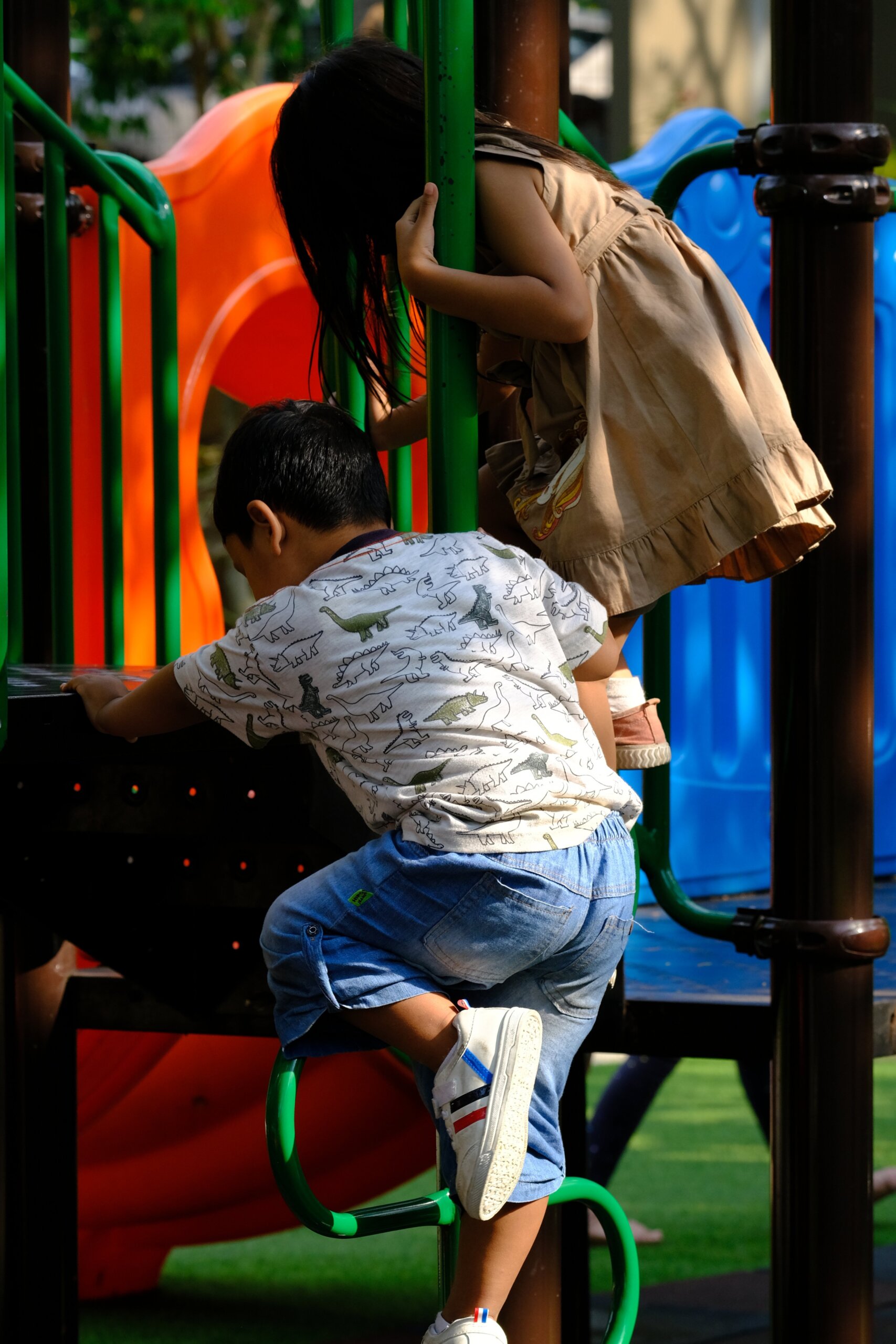
Picture a playground.
Children are climbing, jumping, and running. Through movement, children develop balance, spatial awareness, coordination, and confidence. They learn how to navigate their environment, interact with others, and engage with the world around them.
Now imagine that same playground for a child with hearing and/or vestibular loss.
The environment is the same, but the experience is not.
Some children keep up effortlessly. Others hesitate. Some avoid movement altogether. Others fall. The differences can be subtle, but they matter. Over time, they shape participation, learning, and confidence.
There has been a growing body of work examining motor, balance, cognitive, spatial, and academic outcomes in children with hearing and vestibular loss. While we have learned a great deal, these challenges don’t always present in simple or predictable ways. The very nature of developmental challenges can be hard for a child or a parent to recognize or describe, which makes it difficult to capture scientifically.
As clinicians and researchers, our goal is to give these children the best chance at successful outcomes. To do that, we need to understand not just whether difficulties exist, but how they manifest in everyday experiences, and how we can better identify problems and support solutions.
Understanding the Bigger Picture
Children are not single systems. Balance, movement, learning, and development reflect the integration of sensory, motor, and cognitive processes.
What we know so far:
- Vestibular impairment is common in children with hearing loss.
- Balance deficits are also common in children with hearing loss and are more pronounced when vestibular loss is present.
- Developmental outcomes are shaped by multiple factors, including hearing experience, etiology, comorbidities, and vestibular and balance.
What we are still working toward is understanding how these pieces interact to shape real-world developmental outcomes over time.
Children with Hearing Loss Are At Risk for Vestibular Impairment
Historically, assessing vestibular function in children has been challenging, especially in younger children, who often do not report dizziness (1). Instead, difficulties show up as delays in gross motor milestones, parental concerns, falls, or challenges with activities like riding a bike.
In recent years, pediatric-friendly protocols have improved our ability to assess vestibular function more reliably, even in children under five years of age (2). As testing has improved, a clearer picture has emerged.
Vestibular impairment in children with hearing loss is common (3,4). Across studies, approximately 35–55% of children with sensorineural hearing loss demonstrate vestibular dysfunction (5–11). However, this risk is not evenly distributed. Some children are more vulnerable than others. Vestibular impairment is more likely in children with:
- Severe-to-profound hearing loss (9,12)
- Acquired or progressive hearing loss (13,14)
- High-risk etiologies affecting the inner ear or broader nervous system
Conditions such as congenital cytomegalovirus (cCMV), meningitis, genetic syndromes (e.g., Usher, CHARGE, Waardenburg), and inner ear malformations are associated with higher rates of vestibular impairment (8–10,12,15).
Children with hearing loss should be considered at risk for vestibular impairment and evaluated accordingly, as unrecognized vestibular deficits can shape how children move, participate, and develop.
Children with Hearing Loss Have Poor Balance
Balance is a dynamic process that relies on the integration of multiple sensory systems, including vision, somatosensory input, hearing, and vestibular function (16,17). When one of these inputs is impaired, balance is affected.
For children with hearing loss, this often manifests as real-world difficulties. They are more likely to experience balance challenges than their typically hearing peers, both with and without measurable vestibular deficits (8). Children with combined hearing and vestibular loss are at the highest risk for poor balance outcomes. They are more likely to experience delays in motor development (16,18–20), including later achievement of milestones such as head control and independent walking (19,21).
These delays can often be seen early. Motor milestone timelines can help guide this.
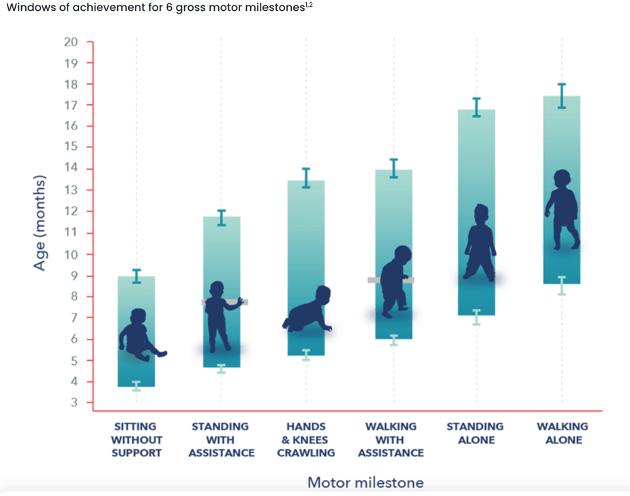
WHO Multicentre Growth Reference Study, 2006 (22)
Children who sit later than ~7.25 months or walk later than ~14.5 months may be at increased risk for vestibular impairment (20), even though these ages still fall within typical developmental expectations.
This is where clinical judgement matters. Within normal limits does not mean without concern. If a child with hearing loss shows delays in motor milestones or has reported concerns about balance, vestibular involvement should be considered and further testing pursued.
Do These Differences Extend Beyond Balance?
Children with hearing loss demonstrate differences in language, working memory, and academic outcomes compared to their peers (23–25). These differences persist even with early intervention, highlighting that early access to sound, while critical, is not sufficient to fully normalize development.
This raises an important question: Do vestibular and balance deficits help explain these developmental differences?
There are plausible mechanisms. One possibility is increased cognitive load. If a child is using more effort to maintain balance and compensate for peripheral sensory deficits, such as hearing and vestibular loss, fewer resources may be available for learning, attention, and participation.
There is some evidence of this. Vestibular impairment can affect dynamic visual acuity (DVA), which is essential for maintaining clear vision during head movement. When this system is disrupted, children may struggle to keep visual targets stable while shifting gaze, which can impact tasks such as reading, note-taking, and tracking text (26). This is why children with vestibular loss may require larger print to read, reflecting reduced reading acuity (26).
There is also emerging evidence that vestibular loss may affect specific cognitive domains such as visuospatial processing and emotion recognition (27). However, across studies, findings remain inconsistent, particularly for higher-order outcomes like attention (28), executive function (20,27), and working memory (20,25,28,29).
Both hearing and vestibular impairments play a role in how children learn and function - but their relative contributions remain an area of active research.
Clinical Takeaways
1. Ask about motor milestones
When did the child sit independently? Walk? Ride a bike?
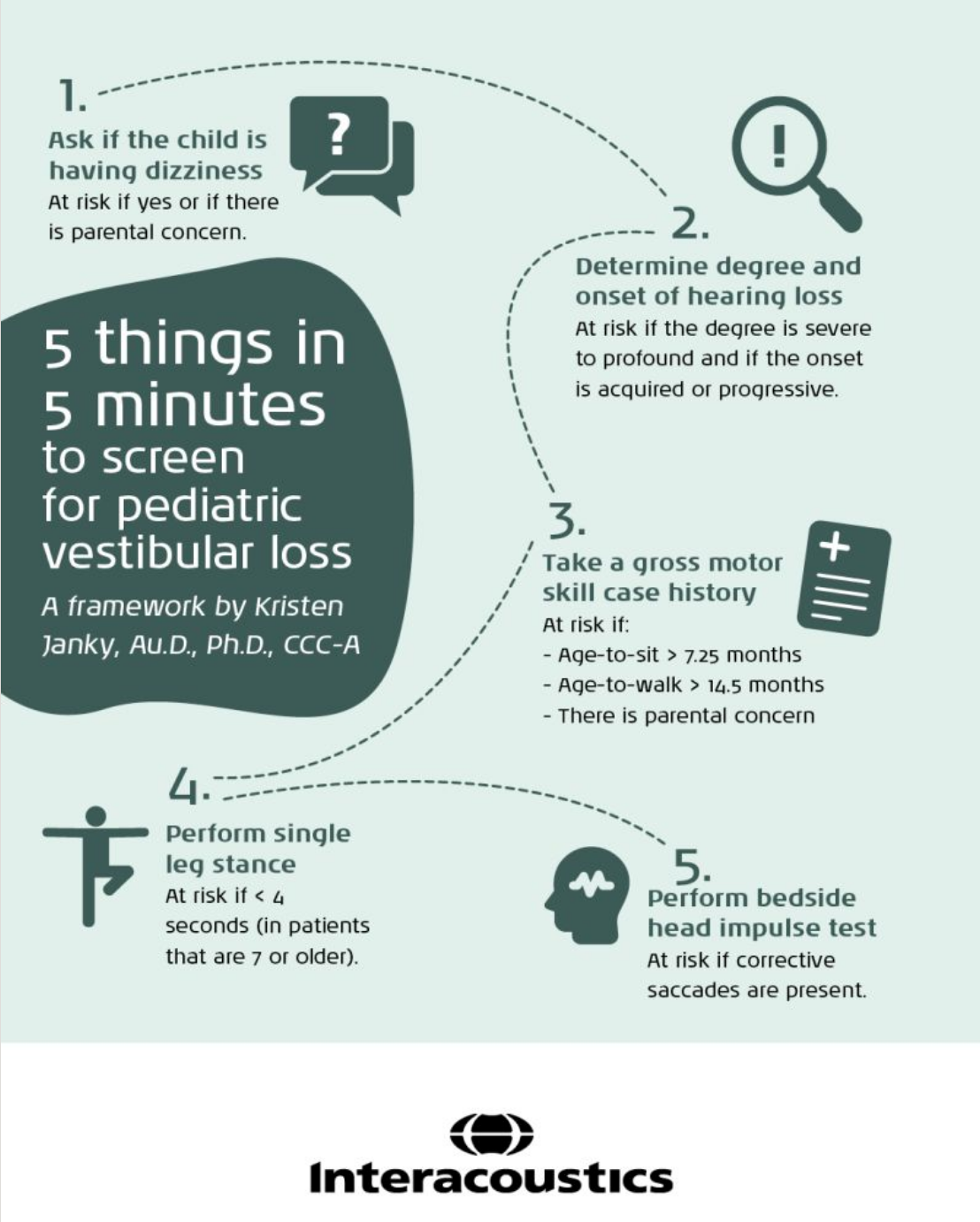
Delays here often reflect real-world balance challenges that may not show up in the booth. Sitting later than ~7.25 months or walking later than ~14.5 months may indicate increased risk for vestibular impairment (20).
2. Ask about dizziness and parental concerns
Parents often notice issues before we measure them. Ask directly about dizziness, falls, and overall stability.
Parental concern is a meaningful clinical indicator and should not be overlooked (20).
3. Screen vestibular and balance function in children with hearing loss
Balance deficits are common, and more pronounced when vestibular loss is also present.
Screening is especially important in higher-risk etiologies (e.g., cCMV, meningitis, genetic syndromes), where baseline vestibular testing should be considered.
Screening vestibular function can be completed bedside, without the need for equipment:
- Dynamic Visual Acuity (DVA)
Assesses vestibulo-ocular reflex (VOR) function during head movement
Red flag: loss of 3+ lines (26,30) - Single-Leg Stance (eyes closed, school-aged children)
Sensitive to bilateral vestibular loss
Red flag: <4 seconds (20,31) - Bedside Head Impulse Test
Screens semicircular canal/VOR function
Red flag: corrective “catch-up” saccade (32)
These tools help determine who needs referral for comprehensive vestibular testing.
Here are 5 things you can do in 5 minutes, recommended by Kristen Janky, Au.D., Ph.D., CCC-A:
Hearing and vestibular impairments don’t just affect balance. They show up in the classroom, in fatigue, in participation, and in how children keep up with their peers.
When we consider the factors that drive variability between children, such as etiology, comorbidities, and performance outside the sound booth - we begin to see the full picture. Some of these differences are subtle, but over time they shape confidence and learning.
What is encouraging is that we are getting better at capturing these everyday challenges. That allows us: to identify children earlier, understand them more completely, and design interventions that translate into meaningful improvements in daily life.
If you’re unsure how to implement this in your practice, reach out and connect.
Because in children, we are not just measuring their sensory systems. We are shaping their lifelong outcomes.
References
- Dhondt C, Dhooge I, Maes L. Vestibular assessment in the pediatric population. The Laryngoscope. 2019;129(2):490–3. doi:10.1002/lary.27255
- Martens S, Dhooge I, Dhondt C, Vanaudenaerde S, Sucaet M, Rombaut L, et al. Pediatric Vestibular Assessment: Clinical Framework. Ear Hear. 2022 Nov 22;Publish Ahead of Print. doi:10.1097/AUD.0000000000001303
- Hazen, Cushing SL. Implications of Concurrent Vestibular Dysfunction in Pediatric Hearing Loss. Curr Otorhinolaryngol Rep. 2020;8(3):267–75. doi:10.1007/s40136-020-00298-3
- Verbecque E, Marijnissen T, De Belder N, Van Rompaey V, Boudewyns A, Van de Heyning P, et al. Vestibular (dys)function in children with sensorineural hearing loss: a systematic review. Int J Audiol. 2017 Jun 3;56(6):361–81. doi:10.1080/14992027.2017.1281444
- Cushing P, C. B, Rutka JA, James AL, Gordon KA. Evidence of Vestibular and Balance Dysfunction in Children With Profound Sensorineural Hearing Loss Using Cochlear Implants. The Laryngoscope. 2008;118(10):1814–23. doi:10.1097/MLG.0b013e31817fadfa
- Cushing SL, Gordon KA, Rutka JA, James AL, Papsin BC. Vestibular end-organ impairment in children with sensorineural hearing loss and cochlear implants: an expanded cohort and etiologic assessment. Otol Neurotol Apr. 2013;34(3):422–8. doi:10.1097/MAO.0b013e31827b4ba0
- Gerdsen M, Hundscheid TM, Boudewyns A, Van Rompaey V, Van De Berg R, Widdershoven JCC. Vestibular assessment in children with sensorineural hearing loss: diagnostic accuracy and proposal for a diagnostic algorithm. Front Neurol. 2024 Feb 1;15:1349554. doi:10.3389/fneur.2024.1349554
- Hazen M, Cushing SL, Gordon KA. Assessment of Balance Deficits in at Risk Pediatric Populations. Ear Hear. 2025 Sep 18. doi:10.1097/AUD.0000000000001728
- Janky KL, Thomas MLA, High RR, Schmid KK, Ogun OA. Predictive Factors for Vestibular Loss in Children With Hearing Loss. Am J Audiol. 2018 Mar 8;27(1):137–46. doi:10.1044/2017_AJA-17-0058
- Loos E, Gerdsen M, Hazen M, Cushing SL, Gordon KA, Perez-Fornos A, et al. Bilateral vestibular hypofunction in children. Int J Pediatr Otorhinolaryngol. 2025 Sep;196:112506. doi:10.1016/j.ijporl.2025.112506
- Wiener-Vacher SR, Quarez J, Priol AL. Epidemiology of Vestibular Impairments in a Pediatric Population. Semin Hear. 2018 Aug;39(3):229–42. doi:10.1055/s-0038-1666815
- Martens S, Maes L, Dhondt C, Vanaudenaerde S, Sucaet M, De Leenheer E, et al. Vestibular Infant Screening–Flanders: What is the Most Appropriate Vestibular Screening Tool in Hearing-Impaired Children? Ear Hear. 2022 Oct 28;Publish Ahead of Print. doi:10.1097/AUD.0000000000001290
- Dhondt C, Maes L, Vanaudenaerde S, Martens S, Rombaut L, Van Hecke R, et al. Changes in Vestibular Function Following Pediatric Cochlear Implantation: a Prospective Study. Ear Hear. 2022 Mar;43(2):620–30. doi:10.1097/AUD.0000000000001125
- Dhondt C, Maes L, Van Acker E, Martens S, Vanaudenaerde S, Rombaut L, et al. Vestibular Follow-up Program for Congenital Cytomegalovirus Based on 6 Years of Longitudinal Data Collection. Ear Hear. 2023 Nov;44(6):1354–66. doi:10.1097/AUD.0000000000001377
- Hazen M, Cushing SL. Vestibular System Considerations. In: Young NM, Iler Kirk K, editors. Pediatric Cochlear Implantation [Internet]. Cham: Springer Nature Switzerland; 2024 [cited 2026 Apr 9]. p. 247–56. Available from: https://link.springer.com/10.1007/978-3-031-67188-3_14 doi:10.1007/978-3-031-67188-3_14
- Maes L, De Kegel A, Van Waelvelde H, Dhooge I. Association Between Vestibular Function and Motor Performance in Hearing-impaired Children. Otol Neurotol. 2014 Dec;35(10):e343–7. doi:10.1097/MAO.0000000000000597
- Nardini M, Jones P, Bedford R, Braddick O. Development of Cue Integration in Human Navigation. Curr Biol. 2008 May;18(9):689–93. doi:10.1016/j.cub.2008.04.021
- De Kegel A, Maes L, Baetens T, Dhooge I, Van Waelvelde H. The influence of a vestibular dysfunction on the motor development of hearing-impaired children. The Laryngoscope. 2012;122(12):2837–43. doi:10.1002/lary.23529
- Inoue A, Iwasaki S, Ushio M, Chihara Y, Fujimoto C, Egami N, et al. Effect of Vestibular Dysfunction on the Development of Gross Motor Function in Children with Profound Hearing Loss. Audiol Neurotol. 2013;18(3):143–51. doi:10.1159/000346344
- Janky KL, Thomas MLa, Patterson J, Givens D. Using Functional Outcomes to Predict Vestibular Loss in Children. Otol Neurotol. 2022 Mar;43(3):352–8. doi:10.1097/MAO.0000000000003433
- Kaga K, Shinjo Y, Jin Y, Takegoshi H. Vestibular failure in children with congenital deafness. Int J Audiol. 2008 Jan;47(9):590–9. doi:10.1080/14992020802331222
- Wijnhoven TM, de Onis M, Onyango AW, Wang T, Bjoerneboe GEA, Bhandari N, et al. Assessment of gross motor development in the WHO Multicentre Growth Reference Study. Food Nutr Bull. 2004 Mar;25(1 Suppl):S37-45. doi:10.1177/15648265040251S105 PubMed PMID: 15069918.
- Ching TYC, Dillon H, Leigh G, Cupples L. Learning from the Longitudinal Outcomes of Children with Hearing Impairment (LOCHI) study: summary of 5-year findings and implications. Int J Audiol. 2018 Geers AE, Sedey AL. Language and Verbal Reasoning Skills in Adolescents With 10 or More Years of Cochlear Implant Experience. Ear Hear. 2011 Feb;32(1):39S-48S. doi:10.1097/AUD.0b013e3181fa41dc
- McSweeny C, Cushing SL, Campos JL, Papsin BC, Gordon KA. Functional Consequences of Poor Binaural Hearing in Development: Evidence From Children With Unilateral Hearing Loss and Children Receiving Bilateral Cochlear Implants. Trends Hear. 2021 Jan 1;25:23312165211051215. doi:10.1177/23312165211051215
- Hazen M, Cushing SL, Gordon KA. Impacts of hearing history, etiology, vestibular and balance function, and socioeconomic marginalization on developmental outcomes in children with cochlear implants. 2026. doi:10.1038/s41598-026-39747-2
- Braswell J, Rine RM. Evidence that vestibular hypofunction affects reading acuity in children. Int J Pediatr Otorhinolaryngol. 2006;70(11):1957–65.
- Van Hecke R, Danneels M, Deconinck FJA, Dhooge I, Leyssens L, Van Acker E, et al. A cross-sectional study on the neurocognitive outcomes in vestibular impaired school-aged children: are they at higher risk for cognitive deficits? J Neurol. 2023 Sep;270(9):4326–41. doi:10.1007/s00415-023-11774-3
- Lacroix E, Edwards MG, De Volder A, Noël MP, Rombaux P, Deggouj N. Neuropsychological profiles of children with vestibular loss. J Vestib Res Equilib Orientat. 2020;30(1):25–33. doi:10.3233/VES-200689 PubMed PMID: 32083606.
- Benjamin RS, Cushing SL, Blakeman AW, Campos JL, Papsin BC, Gordon KA. Effects of the BalanCI on Working Memory and Balance in Children and Young Adults With Cochleovestibular Dysfunction. Ear Hear. 2023 Sep 28. doi:10.1097/AUD.0000000000001433
- Rine RM, Braswell J. A clinical test of dynamic visual acuity for children. Int J Pediatr Otorhinolaryngol. 2003 Nov;67(11):1195–201. doi:10.1016/j.ijporl.2003.07.004
- Oyewumi M, Wolter NE, Heon E, Gordon KA, Papsin BC, Cushing SL. Using balance function to screen for vestibular impairment in children with sensorineural hearing loss and cochlear implants. Otol Neurotol. 2016;37(7):926–32.
- Christy JB, Payne J, Azuero A, Formby C. Reliability and diagnostic accuracy of clinical tests of vestibular function for children. Pediatr Phys Ther Off Publ Sect Pediatr Am Phys Ther Assoc. 2014;26(2):180–9. doi:10.1097/PEP.0000000000000039 PubMed PMID: 24675116.