
What’s New about Getting Older


Back to School: Time to Refresh Evidence-based Practice on Dementia Risks and Dementia-inclusive Home and Community Care
September is a great time to update Canadian audiologists on some important guidelines and standards with implications for hearing care that were published in the summer. One is an international publication from the World Health Organization (WHO): the “Guidelines on Risk Reduction of Cognitive Decline and Dementia, second edition” updates the 2019 first edition. The other is a new Canadian standard; CSA Z2000:26 “Dementia-inclusive Home and Community Care” provides a new framework that underscores the importance of integrated person-centered home and community care that is intended to shape Canada-wide changes for people living with dementia and their care partners, service providers in various settings, oversight bodies, policy makers and educators. Some highlights are outlined below to encourage audiologists to get reading. Familiarity with these documents will help individual clinicians adapt counseling and the information they give clients, build new collaborations with health professionals working in integrated person-centered care for older people, and advocate for new hearing care services in the health care system. Importantly, both documents highlight the need to expand our work beyond the four walls of our clinics and into the broader community. You might even get some ideas about how to age well yourself!
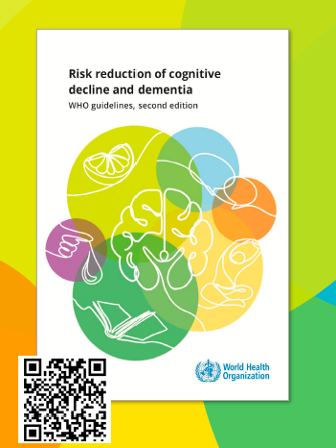
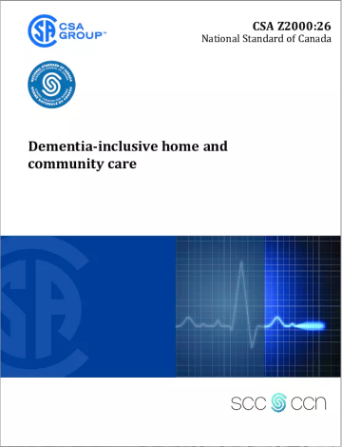
NEW WHO GUIDELINES ON RISK REDUCTION OF COGNITIVE DECLINE AND DEMENTIA
For the 2026 second edition of the WHO guidelines on risk reduction of cognitive decline and dementia, a rigorous international review process evaluated new evidence published since the first edition of the guidelines, published in 2019. Many audiologists are familiar with the 14 potentially modifiable risk factors for dementia included in the widely cited Lancet Report on Dementia Prevention, Intervention, and Care (Livingston et al., 2024). The WHO guidelines go beyond the Lancet Report by not only identifying potentially modifiable risk factors but also evaluating evidence on whether interventions prevent or delay dementia. A total of 22 factors were considered. The authors validated prior evidence for 5 factors covered in the 2019 guidelines. Recommendations favoured interventions for physical inactivity, smoking, harmful alcohol use, and dyslipidaemia (LDL cholesterol), while they did not favour dietary supplementation without diagnosed deficiency. Nine other factors covered in the 2019 guidelines were updated in 2026. For five factors, new data confirmed previous recommendations. Evidence supported recommendations favouring cognitive activity and management of diabetes, hypertension and obesity, but not favouring menopausal hormone therapy in those 65+ year old. For four other factors, evidence in 2019 was insufficient to justify a recommendation (hearing loss, social activity, healthy diet, depression). In addition, the authors evaluated new evidence for 8 factors not considered in the 2019 guidelines: air pollution, HIV, menopausal hormone therapy for early menopause (<65 years of age), sleep, stroke, traumatic brain injury (TBI), vision impairment, and multi-domain interventions. Three points to highlight for audiologists are that 1. hearing loss has been promoted to a conditional recommendation based on low-quality evidence; 2. the list of risk factors is growing; 3. more research is needed to fill remaining gaps.
Strength of Current Recommendations about Risk Factors
| Strong (3) | Conditional (12) | Insufficient (7) |
|---|---|---|
| Physical inactivity | Dyslipidaemia | Depression |
| Smoking | Alcohol use | Vision loss |
| Dietary Supplements* | Hypertension | Sleep |
| Diabetes | HIV | |
| Obesity | TBI | |
| Cognitive Activity | Stroke | |
| MHT (>65 years of age)* | MHT (<65 years of age) | |
| Air pollution | ||
| Multi-domain | ||
| Healthy balanced diet | ||
| Social inactivity | ||
| Hearing loss |
*Evidence against the factor being a risk;
Blue: validated evidence for prior factor;
Black: new evidence for prior factor;
Red: new evidence for factor with prior insufficient evidence
Green: new factor
Three Different Types of Intervention Targets
The guidelines include a section on each risk factor. They emphasize the need to consider differences in intervention targets and their intersections. The guidelines differentiate three types of intervention targets. One type of intervention targets changes in unhealthy behaviors and lifestyle choices, mainly through health psychology approaches. Another type of intervention target includes managing health conditions and biological factors diagnosed clinically, possibly through pharmaceutical (e.g., drugs to treat diabetes, obesity, or hypertension) or rehabilitative treatments (e.g., hearing or vision devices). A new type of intervention target includes reducing exposure to environmental health hazards, possibly through public policy measures. Of course, multi-domain interventions would address multiple targets.
Interventions to Promote Healthier Behaviours and Lifestyles:
- Physical inactivity
- Cognitive inactivity
- Social inactivity/isolation
- Unhealthy diet
- Smoking
- Harmful alcohol use
Inteventions to Manage Diagnosed Health (Biological) Conditions:
- Obesity
- Hypertension
- High cholesterol (Dyslipidaemia)
- Diabetes
- Depression
- Stroke
- TBI
- HIV
- Sleep disorder
- Menopause (hormone treatment depending on sex and age)
- Hearing loss
- Vision loss
Interventions to Reduce Exposures to Environmental Health Hazards
- Air pollution
Contextualizing Hearing Loss as a Risk Factor
Associations between hearing loss and cognitive decline in older people may be due to one or more common causes and/or to direct and/or indirect causal factors.
Common Causes of Hearing Loss and Dementia: Some unhealthy behaviours and lifestyle choices (physical inactivity, unhealthy diet, harmful alcohol use, smoking) and environmental factors (air pollution) that increase dementia risk may also elevate risk for some biological health conditions (hypertension, diabetes, dislipidaemia, obesity, stroke) that, in turn, increase dementia risk. Notably, a similar trio of behavioural (e.g., smoking), biological (e.g., diabetes), and environmental factors (e.g., noise) increases the risk of hearing loss. Common causes likely contribute to the significant associations between hearing loss and cognitive decline or dementia such that an intervention to manage diabetes or hypertension may reduce risk for hearing loss and risk for dementia.
Hypothesized Causal Mechanisms: In addition to likely common causes that could explain associations between hearing and cognitive declines, causal mechanisms may also explain the associations. Figure 2 in the new WHO guideline illustrates four mechanisms that might explain how interventions for different risk factors could prevent or delay dementia. The figure shows that hearing loss interventions might prevent or delay dementia by three possible mechanisms: 1. Reduced stress and inflammation; 2. Reduced dementia neuropathology; 3. Cognitive and brain reserve. The fourth mechanism, decreased vascular change, is not considered a mechanism to explain benefit from hearing loss interventions.
In the case of hearing loss, the three possible causal mechanisms identified in the WHO Guidelines would be consistent with well-known hypotheses proposed as possible explanations of associations between hearing loss and cognitive decline: 1. Auditory information degradation increases cognitive demand (effortful listening), thereby possibly increasing stress; 2. Long-term auditory deprivation effects could permanently alter patterns of brain activation; 3. As listening conditions become more challenging, there is a shift from bottom-up sensory processing to compensatory top-down cognitive processing, so people with greater reserve can compensate more effectively, and better compensation helps maintain greater reserve. Therefore, associations between hearing and cognitive declines in aging might be explained by a common cause or by different direct causal mechanisms (see Phillips et al., 2022). Moreover, there may be indirect causal connections between hearing loss and cognitive decline, as hearing loss may increase the risk of unhealthy behaviors and lifestyles such as physical, cognitive, and social inactivity, which may, in turn, be risk factors for dementia.
Counselling
Counselling about the associations between hearing loss and cognitive decline and dementia should acknowledge that the WHO now provides a conditional recommendation for audiologic rehabilitation with hearing aids to reduce the risk of cognitive decline or dementia. However, the evidence quality is considered low, so more research is needed, and causal mechanisms have not been proven. More research is needed to increase the strength of the evidence about the effectiveness of interventions for preventing or delaying cognitive decline and dementia. Research is also needed to determine the mechanisms that underpin the associations between hearing loss and dementia risk. Nevertheless, audiologic rehabilitation offers many benefits beyond any direct or indirect effects on brain health. Our evolving understanding of how hearing rehabilitation may reduce the risk of cognitive decline and dementia should make us appreciate that hearing loss and dementia share common risk factors. Whether or not people use hearing aids, healthy lifestyle choices and management of other health conditions may be good for both the brain and the ears. Managing hearing loss may indirectly reduce dementia risk by helping people maintain a healthy level of physical, cognitive, and social activity.
NEW CANADIAN STANDARDS ON “Dementia-inclusive home and community care”
In July, the Canadian Standards Association published new CSA Z2000:26 standards. These new standards open a Canadian opportunity to shape adaptations and innovations in practice and policy to serve people living with dementia in home and community settings. Whereas previous standards focused on residential long-term care (CAN/HSO 21001:2023), the new standard focuses on home and community care and the continuity across settings. This Fall reading should get Canadian audiologists thinking about how they might find new ways to provide hearing care in Canada based on the new WHO Guidelines outlined above.
Read the Standard
The new standards are built on consensus and evidence-informed guidance and are intended to improve safety, quality and trust in dementia-inclusive home and community care. They target people living with dementia and their care partners, health care providers working in various settings (public, private, non-profits), oversight bodies, policy makers and educators. The implications range from changes to daily front-line practice to long-term, high-level strategy and policy changes. Using common language, the standards were developed to improve access to care, consistency in care, and continuity of care as people move from primary clinic-based care to home care and then to long-term care. These Canadian standards align with the WHO 2024 ICOPE guidance on integrated, interprofessional, person-centered primary and community care for older people. An overall goal is to support “Aging in (the Best) Place”. While advancing equity, the standards endorse person-centered team-based approaches rather than a uniform one-size-fits-all approach to care. Person-centered care strives to preserve dignity and well-being above and beyond managing diagnoses.
Watch a Webinar
A webinar “Dementia Care Reimagined: New National Standard and Real-World Perspectives” was held to illustrate and discuss the application of the new standard. You can view the 1.5-hour webinar at https://www.youtube.com/watch?v=hFNFlEkFPRw. It includes an overview of the standards (about 30 minutes). The standards include four clauses and two appendices:
Clause 4: Organizational purposes and objectives
Clause 5: Organizational structures and resources for providing care
Clause 6: Assessment, care planning and service delivery
Appendix A: Dignity of risk in home and community
Appendix B: Environmental modification in home
The overview is followed by a facilitated interactive discussion (about 1 hour) among four panelists who were involved in writing the standards: Heide Croucher an Occupational Therapist who Directs Home Care for the Yukon Government, Jae Yon Jones who is the Regional Director for long-term care and assistive living at Island Health in BC, Jim Mann who is a person living with dementia, and Miranda Romanowicz who is the CEO of the Canadian Support Workers Association.
Change Your Practice
Overall, successfully applying the standards will involve relational approaches that depend on optimizing communication and social connections. Inter-professional teamwork will be essential to providing integrated, person-centered care in home and community settings. Education and innovation will be needed as health professionals adapt their practices to apply the standards in team-based practices. As Canadians spread and scale new practices, Personal Support Workers (PSW) could be important new team members for audiologists. Audiologists interested in how PSWs could support communication can view an excellent webinar presented in 2022 by Marie Savundranayagam from UWO on “Evidence-based communication strategies that support person-centered dementia care”. More generally, audiologists must adapt their practice as key team members in home and community care initiatives.
REFERENCES and RESOURCES
CSA Z2000:26. July 2026. Dementia-inclusive Home and Community Care.
Video: https://www.youtube.com/watch?v=hFNFlEkFPRw
HSO (Heath Standards Organization). (2023). CAN/HSO 21001:2023-Long-term care services. https://healthstandards.org/standard/long-term-care-services-can-hso21001-2023-e/
Livingston, G., Huntley, J., Liu, K. Y., Costafreda, S. G., Selbæk, G, Alladi, S., et al. (2024). Dementia prevention, intervention, and care: 2024 report of the Lancet standing Commission. The Lancet, 404, 572-628. https://doi.org/10.1016/S0140-6736(24)01296-0
Phillips, N. A., Isler, L., Kabir, R., Hämäläinen, A., Wittich, W., Pichora-Fuller, M. K., & Mick, P. (2022). Hearing and visual acuity predict cognitive function in adults aged 45-85 years: Findings from the baseline wave of the Canadian Longitudinal Study on Aging (CLSA). Psychology and aging, 37(8), 891–912. https://doi.org/10.1037/pag0000716
Savundranayagam, M. Y. (2022, December 14). Evidence-based communication strategies that support person-centered dementia care. BrainXChange national webinar. https://vimeo.com/781557037
WHO. (2024). Integrated Care for Older People (ICOPE)Handbook: Guidance for Person-centred Assessment and Pathways in Primary Care, 2nd Edition. https://www.who.int/publications/i/item/9789240103726
World Health Organization (2026). Risk Reduction of Cognitive Decline and Dementia Guidelines, Second Edition. https://www.who.int/publications/i/item/9789240123557
- Recording: Launch of WHO’s guidelines for risk reduction of cognitive decline and dementia, second edition - Z… (the webinar recording is available in English, French, Spanish and Portuguese. Select your preferred audio language in the video player)
- Video (suitable for patients) – What you can do to protect your brain