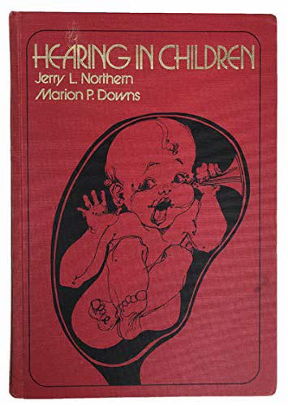
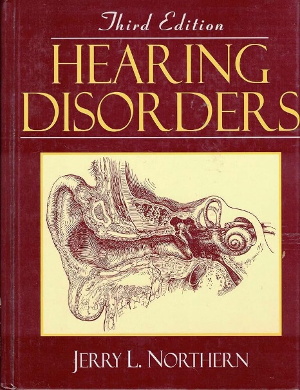
Editor’s Note: Sadly Dr. Jerry Northern passed away recently. I first ran in to the name Jerry Northern after reading his textbook Hearing in Children by Northern and Down, and also Hearing Disorders when I began my masters of audiology in 1979. Since that time, I had purchased a few updates of both books as new editions became available. Dr. Northern gave a 2022 interview to Dr. Bob Traynor- one of our columnists at CanadianAudiology.ca- in the Giants of Audiology segment of Hearing Health and Technology Matters. We have received permission to reprint this interview here.
October 31, 2022
Dr. Northern is a Founding Member of the American Academy of Audiology (AAA) and served the organization’s third President. His professional activities have included clinical practice, teaching, medical-legal consultation, research activities, as well as extensive writing and lecturing. A prolific author, he has written, edited and co-authored more than a dozen textbooks including several reprinted in multiple editions and translated into foreign language editions.
His textbooks are widely used in colleges and universities and include Hearing in Children (6th Edition, 2014), Hearing Disorders (3rd Edition, 1996), Probe Microphone Measurements: Hearing Aid Selection and Assessment (1992), and Infants and Hearing (1996). He has written more than 35 chapters in other textbooks and authored more than 65 scientific journal articles. Dr. Northern created Seminars in Hearing and served as editor-in-chief from 1975-2000.
He is known nationally and internationally for his efforts on behalf of children with hearing loss.
Dr. Northern’s humble bio reads: Jerry Northern is a Professor Emeritus at the University of Colorado School of Medicine in Denver, Colorado. He’s president of the Colorado Hearing Foundation and serves on the board of directors of the Marion Downs Center in Denver, Colorado.
Dr. Northern retired from the faculty at the University of Colorado School of Medicine in 1996, after 26 years at the hospital as professor of Otolaryngology and director of Audiology Clinical Services.
Dr. Northern has been a major teacher to all of us and has done numerous consulting projects with various manufacturers. He was also an inspiration to those of us who were students at one time or another, because we all wanted to do what Dr. Northern was doing. Further, he has been an ambassador for audiology all around the world. Welcome to This Week in Hearing, Jerry.
Well, thanks, Bob. Nice to be here. And I’m not sure I should be included among the giants of audiology. I’m only 5 foot 10, and in my older years, I seem to be shrinking a little bit every year.
But those of us who came up in Colorado stood on people’s shoulders, and yours. And of course, we didn’t want to stand on Marion’s shoulders too much, because that would not have been polite.
The first thing we have to talk about is that you’ve had a wide practice within the field, a wide scope of consultancies, and saw the profession go from body aids, actually probably no aids, all the way through cochlear implants.
I still remember as a student at the medical school a study called Y-cord versus binaural hearing that was presented at the International Hearing Aid Seminar, with Marion Downs, yourself, and Sam Lybarger. I didn’t really do too much, but I got to be on a paper. And how cool was that? My understanding is you’ve done this ambassadorship to 30 or more countries.
Well, thanks. I’ve been a lucky guy. I think I’ve been around during the Golden Age of audiology. I’ve had so many opportunities and count myself lucky to have been in the right places at the right time. It’s been just a fabulous career for me, and I’m delighted for any contributions that I’ve made to the success or the progress of audiology. It’s been my pleasure all the way through.
So you have kind of a unique connection to hearing impairment and deafness and those kinds of things. And I know that the group would be interested in hearing about those.
Well, yeah, it is pretty unique. I certainly never in college had any interest in speech and hearing. In fact, I went to Colorado College and I was an experimental psychology major. I wanted nothing really to do with hearing and speech. It meant nothing to me, except that my parents were divorced when I was very young.
At two years of age, I was sent to live with my grandparents with my older brother. They were both profoundly deaf graduates of Gallaudet College in the early 1900s. So we found ourselves as little boys living in a house with grandparents who were totally deaf, and we had no means or ways of communicating with them.
We had to learn sign language rather quickly. That means I learned sign language at the age of two. It’s always been like a second language for me.
My grandparents had two children, my father and my aunt, both with normal hearing, because my grandparents lost their hearing through spinal meningitis, which used to go through the country like a giant epidemic, leaving lots of people with profound hearing loss.
Their daughter, my aunt, went to Gallaudet. She became a teacher of the deaf and taught for 40 years in Kansas, California, and around.
Then I came along. I have a master’s degree from Gallaudet, and my daughter Amy became a teacher of the deaf. Believe it or not, my granddaughter was a teacher’s aide over in the School for the Deaf in Seattle. So interestingly, we’ve had five generations of our family involved in deafness in one way or another.
Well, you have to compliment the grandparents there for taking you and your brother in, as you say, as wild grandsons. I guess you had a VA traineeship in Denver that kind of led to the PhD and the Army.
Actually, when I was at Gallaudet, I had to take a course in hearing and deafness or something in the Hearing and Speech Center. That was my first introduction to audiology, and I had two great mentors who were on the faculty of the program.
I’d go down and watch them do audiology with the deaf students at Gallaudet, and I found that fascinating. In fact, it was really sensory psychology with a clinical application.
I thought it really fit my educational college background in psychology and my background with deafness and my grandparents. It wasn’t very long before I thought, wow, that could be a great opportunity here for a career for me.
So that started my route to audiology. Subsequent to that, I quickly got a VA traineeship in Denver in audiology. That brought me back to Denver for a few years while I worked on my PhD. Thank you very much to the VA. That was terrific. And I got the grand stipend of about $4,000 a year.
Yeah, that’s kind of what degrees cost at that time. Now they cost only slightly more than that, of course. Were you the first Army audiologist?
Well, no, actually, I was the second. I wanted to be the first. Somehow a speech pathologist snuck in ahead of me, and I don’t know where he ever went. I never met him, and he disappeared somewhere along the way.
I was commissioned in the Army in armor, so I was a small-unit commander for tanks. I kept getting deferments to go to graduate school. This was during the Vietnam years. There was no specialty in the Army for audiology at that point.
Then suddenly, just as I finished my PhD, the Army was bringing back enough hearing-impaired active soldiers from Vietnam that they really needed an audiology program. And so they set up a specialty assignment for audiologists.
I had an ENT friend who was in the military at Fitzsimons Army Hospital in Denver. He called me and said, “Jerry, now’s the time. If you want to switch branches, you could get into the Medical Service Corps as an audiologist.”
You can bet how fast I wanted to get out of tanks and armor into audiology. And so I was able to apply almost right away. Yet I was still the second guy, not the first.
Well, I also understand you’re one of the founders of the military audiology and speech pathology society.
Another funny little story. I was at Walter Reed Army Medical Center at that time. I was on active duty as a captain. I was the assistant director there of the Army Speech and Hearing Center.
I applied for funds to attend an ASHA convention, and I got an answer back from the Surgeon General, this would have been in 1969, that they were not funding people to go to conventions. After all, we were in the Vietnam War. That was really just not a priority.
I got a phone call from a PhD friend of mine who was an audiologist in the Air Force, Dr. Jim Endicott, and the same thing had happened to him. I thought that over, and working with him, we established the military audiology and speech pathology society.
Jerry Northern, Ph.D., is Professor Emeritus at the University Of Colorado School Of Medicine in Denver, Colorado. He is President of the Colorado Hearing Foundation and serves on the Board of Directors of the Marion Downs Center in Denver. Dr. Northern retired from the faculty of at University of Colorado School of Medicine in 1996 after 26 years at the University Hospital as Professor of Otolaryngology and Director of Audiology Clinical Services.
He received a BA degree in Experimental Psychology from Colorado College in 1962, holds Master’s Degrees from Gallaudet University of Washington, DC (MS, 1963) and the University of Denver (MA, 1964) and earned his PhD in Audiology at the University of Colorado (Boulder) in 1966. He served in the US Army Medical Services Corps during the Viet Nam Conflict from 1966 – 1968 and continued in civilian status as the Assistant Director of the US Army Audiology and Speech Pathology Center at Walter Reed Army Medical Center through 1970. His professional activities have included clinical practice, teaching, medical-legal consultation, research activities, as well as extensive writing and lecturing. A prolific author, he has written, edited and co-authored more than a dozen textbooks including several reprinted in multiple editions and translated into foreign language editions.