
From the Labs to the Clinics


From the Labs to the Clinics
Renowned auditory researcher Dr. Robert Harrison brings us up to date on information and research from the Labs. Appropriately titled “From the Labs to the Clinics”, Bob is involved in laboratory and applied/clinical research, including evoked potential and otoacoustic emission studies and behavioural studies of speech and language development in children with cochlear implants. For a little insight into Bob’s interests outside the lab and the clinic, we invite you to climb aboard Bob’s Garden Railway.
Red LED Laser Light Therapy (photobio-modulation) to Prevent Noise-Induced Hearing Loss
First, what is photobio-modulation therapy (PBMT)? The idea is that light exposure to biological systems can sometimes have therapeutic effects. For example, Nobel Prize-winning studies in 1903 by Niels Ryberg Finsen showed that radiation from the sun could cure bacterial skin diseases [1].
More recently, with the development of the laser, it became possible to control light radiation level, wavelength and exposure times, and the field of Phototherapy became established. Early examples of treatment have been shown to increase hair growth, or to improve wound healing [2-4]. Various terms are now used for such treatments, including low-level laser therapy, cold laser, or photobio-modulation. Typical light-radiation used is red to near-infrared laser light (600-1400 nm) at low intensity.
It has been suggested that photobio-modulation therapy might have a role in hearing protection and several animal studies have been published [5-8]. For this report, with its usual “from the labs to clinic” theme, I found a recent lab study of some interest that may (eventually) have practical clinical application.
A quick preamble. You may remember that, many decades ago, audiometric studies of factory workers in noisy industrial environments found that they did not develop the level of noise-induced hearing loss (NIHL) expected based on exposure levels. Theories were proposed that chronic acoustic exposure could somehow make the cochleas resistant to NIHL. The terms haircell “toughening” or cochlear “conditioning” were used to suggest that mechanisms exist to prevent degeneration of haircells or other cochlear structures despite acoustic overstimulation. The literature on toughening is extensive; some key references include [9-13].
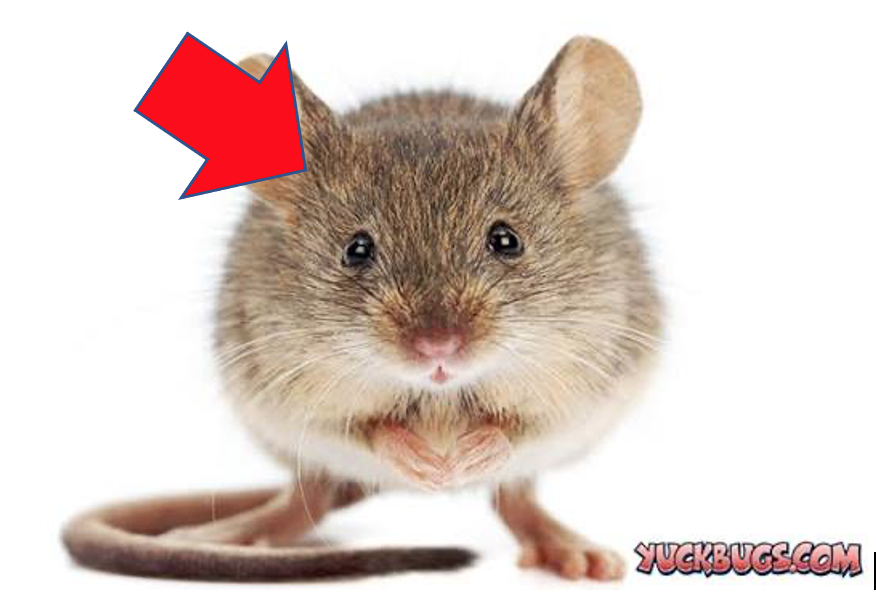
The recent laboratory study (in mice) that I want to report [ref. 14] explored the use an LED device implanted in the external ear canal to expose the inner ear to near-infrared light. The experimental question was: can this photobio-modulation, given before noise exposure (120 dB SPL for 2 hours), have a protective effect? The study used ABR amplitude measures to assess noise-exposure effects in experimental animals that received red-light treatment compared with untreated controls.
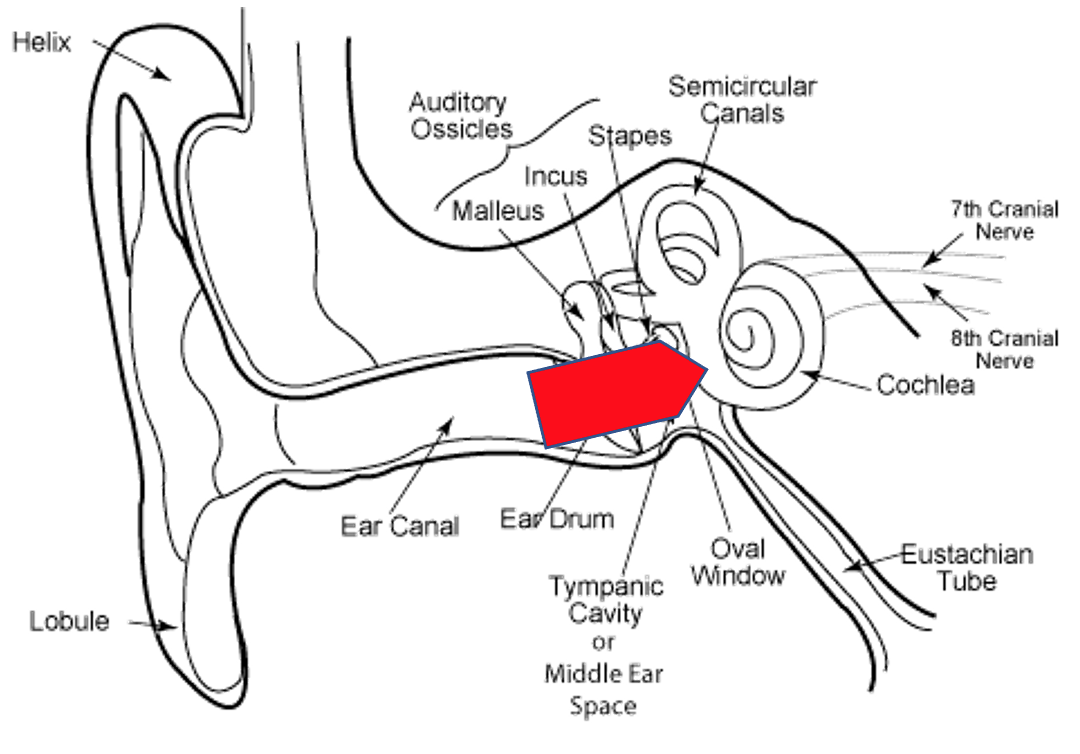
The preliminary results show that photobiomodulation therapy has a limited therapeutic effect. The deterioration in ABR responses caused by the noise exposure was less in animals preconditioned with near-infrared light stimulation. The authors speculate on how laser therapy might be effective. For example, they suggest that laser-induced heating of the cochlea may, in turn, reduce the release of reactive oxygen species (ROS) and other free radicals known to be implicated in causing cell damage.
Currently, all this work remains in the laboratory. Much more research is needed to develop clinically safe methods for applying photobio-modulation in human subjects (e.g., implanted LED devices near the inner ear?) and to serve those who work in noisy environments and are vulnerable to NIHL.
References
- Niels Ryberg Finsen won the 1903 Nobel Prize in Physiology or Medicine for research into the treatment of diseases, especially lupus vulgaris (cutaneous tuberculosis), with concentrated light radiation.
- Mester, E., Szende, B. & Gartner, P. [The effect of laser beams on the growth of hair in mice]. Radiobiol Radiother (Berl) 9, 621-626 (1968).
- Mester, E., Szende, B., Spiry, T. & Scher, A. Stimulation of wound healing by laser rays. Acta Chir Acad Sci Hung 13, 315-324 (1972).
- Mester, E., Spiry, T., Szende, B. & Tota, J. G. Effect of laser rays on wound healing. Am J Surg 122, 532-535, doi:10.1016/0002-9610(71)90482-x (1971).
- Lee, J. H. & Jung, J. Y. Application of photobiomodulation in hearing research: animal study. Med Lasers 9, 1-5 (2020).
- Basta, D. et al. Near-infrared-light pre-treatment attenuates noise-induced hearing loss in mice. PeerJ 8, e9384, doi:10.7717/peerj.9384 (2020).
- Meuser, M., Schwitzer, S., Faraji, P., Ernst, A. & Basta, D. Peri-Traumatic Near-Infrared Light Treatment Attenuates the Severity of Noise-Induced Hearing Loss by Rescuing (Type I) Spiral Ganglion Neurons in Mice. Brain Sci 15, doi:10.3390/brainsci15010062 (2025).
- Strubing, I. et al. Neuroprotective Effect of Near-Infrared Light in an Animal Model of CI Surgery. Audiol Neurootol 26, 95-101, doi:10.1159/000508619 (2021).
- Hamernik, R. P. & Ahroon, W. A. Susceptibility of the noise-toughened auditory system to noise-induced trauma. Hear Res 132, 140-148, doi:10.1016/s0378-5955(99)00039-8 (1999).
- Ahroon, W. A. & Hamernik, R. P. Noise-induced hearing loss in the noise-toughened auditory system. Hear Res 129, 101-110, doi:10.1016/s0378-5955(98)00227-5 (1999).
- Canlon, B. The effect of acoustic trauma on the tectorial membrane, stereocilia, and hearing sensitivity: possible mechanisms underlying damage, recovery, and protection. Scand Audiol Suppl 27, 1-45 (1988).
- Canlon, B. & Fransson, A. Morphological and functional preservation of the outer hair cells from noise trauma by sound conditioning. Hear Res 84, 112-124, doi:10.1016/0378-5955(95)00020-5 (1995).
- Ryan, A. F., Bennett, T. M., Woolf, N. K. & Axelsson, A. Protection from noise-induced hearing loss by prior exposure to a nontraumatic stimulus: role of the middle ear muscles. Hear Res 72, 23-28, doi:10.1016/0378-5955(94)90201-1 (1994).
- Photobiomodulation Therapy (PBMT) for Preventing Noise-Induced Hearing Loss. Griffith, O.C., Jarrouj, G., Kessler, L, Tan, X., Fiebig, T., Basta, D., Esmailie, F., Richeter C-P. Northwestern University, RayBalance, Helios Clinic Berlin-Buch, University of North Texas
- https://doi.org/10.21203/rs.3.rs-10731927/v1
Please note the time of writing (October 2026) this paper is a preprint and still under review.