

Access Points


<title>A Sunflower at the Gate: Hearing Loss and the Signal That Speaks First
By Lorin MacDonald, CM, OOnt, LSM, JD
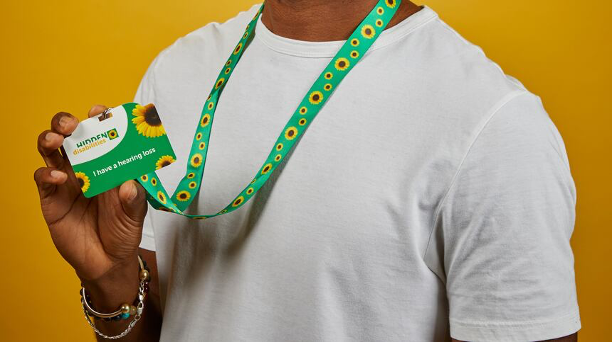
An airport announcement changes a departure gate. A security officer gives instructions while looking away. A boarding agent calls a passenger’s name from across a crowded lounge. For someone who cannot hear that information, an ordinary journey can mean remaining on high alert, unsure whether an important instruction has been missed. Yet the people nearby may see nothing that explains why the passenger has not responded.
I was born with profound bilateral sensorineural hearing loss. As a human rights lawyer and disability advocate, I understand accessibility professionally and personally. Hearing loss illustrates how easily a disability can go unrecognized, particularly in places where people move quickly and communication depends heavily on sound. The Hidden Disabilities Sunflower lanyard offers a practical way to signal that a traveller may need support. It can prompt staff to recognize a communication need before a misunderstanding occurs.
Hearing loss is often described as invisible. I prefer “non-apparent”: the disability exists, but another person may not recognize it immediately. A traveller may speak clearly, navigate an airport independently, and appear confident. None of those things establishes whether they can hear an announcement or understand a question. Even a visible hearing aid or cochlear implant does not indicate to staff which communication support will work.
For audiologists, the difference between detecting sound and understanding speech is familiar. In a busy terminal, that distinction has immediate consequences. Background noise, distance, reverberation and unfamiliar voices can complicate communication. A conversation that works at a quiet check-in counter may become inaccessible at a crowded gate. Travelling asks people to adapt repeatedly, often with little control over the environment.
Staying alert is also work. Has boarding started? Was that announcement about my flight? Did everyone stand up because the gate changed? A traveller may watch screens and other passengers closely while checking a phone for updates. When information is available only through sound, missing it is an access problem. The resulting uncertainty can begin long before anyone boards the aircraft.
The Sunflower program uses a recognizable sunflower symbol to allow people to voluntarily indicate that they have a non-apparent disability and may need assistance, understanding, or additional time. Its green lanyard with yellow sunflowers offers a discreet way to communicate this possibility without explaining a diagnosis to everyone encountered along the journey.
The program includes participating airports in Canada and internationally. In 2024, Air Canada became the first airline in North America to adopt the Sunflower, and the lanyard is now recognized at more than two dozen Canadian airports as well as on board Air Canada, Rouge and Express flights. That in-flight recognition matters: the cabin can present additional communication barriers—engine noise, overhead announcements, and a flight attendant who may be turned away or moving through the aisle. For a traveller with hearing loss, being recognized from check-in through landing, rather than only at the gate, can make the difference across an entire journey.
For travelers with hearing loss, that visual cue can help before they have a chance to explain. Someone who does not respond to a spoken instruction may otherwise be perceived as inattentive or uncooperative. Recognition of the lanyard can encourage a staff member to pause, get the person’s attention, and ask how to communicate. That pause creates an opportunity to prevent a misunderstanding rather than repair one afterwards.
Consider a security checkpoint. Several instructions may arrive in quick succession while the traveler manages belongings and watches where to go. A staff member who recognizes the Sunflower can face the person, explain one step at a time, and offer written clarification. At a gate, an agent might confirm a boarding change directly or write down the new location. These are examples of useful responses, rather than services automatically guaranteed by the lanyard.
The emotional benefit can matter, too. Explaining a disability repeatedly takes effort, especially when it must happen in the same noisy environment that causes the difficulty. A recognized symbol can make it easier to begin that conversation. It may help a traveller feel more comfortable asking for clarification before confusion escalates. For someone who worries about holding up a queue, a patient response can change the tone of the encounter.
The sunflower symbol itself does not identify a particular disability or explain what assistance would help. A personalized Sunflower card can share more about the wearer’s communication needs. Two people wearing the same lanyard may need entirely different support. Even among people with hearing loss, communication preferences vary. One may benefit from clear speech with an unobstructed view of the speaker’s face; another may need written information, captioning or sign language. Staff should ask the traveller directly what works and respect the answer.
Choice is equally important. Some people welcome a visible signal; others prefer to disclose their hearing loss privately or only when necessary. Both approaches deserve respect. The Sunflower should remain an option, and access should never depend on wearing it. A person without a lanyard may have precisely the same communication needs as someone wearing one. The symbol also should not invite assumptions about a traveller’s competence or independence.
For audiologists, this creates a useful opening for conversations about travel. Asking patients about an upcoming trip can reveal concerns that a device-focused discussion might miss. Can they access boarding information? How will they communicate at security? What would help if a flight is cancelled? Introducing the Sunflower alongside other communication strategies links hearing care to situations where patients may feel uncertain.
Preparation should include checking whether the airports on the itinerary participate and how to obtain a lanyard. Travellers should also contact their airline about specific assistance needs rather than assume the symbol communicates those arrangements. A short written message on a phone or card can help: “I have hearing loss. Please face me and write down important information.” The wording should reflect the individual’s preferences. Visual flight updates and a plan for confirming changes provide additional support.
The program’s effectiveness ultimately depends on what happens after someone notices the lanyard. Recognition must lead to respectful communication. Airports and airlines should train staff to ask before assisting, address the traveler rather than automatically turning to a companion, and confirm that essential information is understood. They should also make announcements available visually and improve communication throughout the journey. A lanyard cannot compensate for information systems that continue to exclude people.
I see the Sunflower as a useful invitation to pay attention to needs that may otherwise be overlooked. For a traveller with hearing loss, its benefit may be as immediate as a staff member stopping, facing them and making sure they receive the information everyone else has heard. Audiologists can help patients understand that possibility while setting realistic expectations. The goal is a journey in which people can communicate their needs, receive an appropriate response and travel with greater confidence.
Information about the program, personalized cards and participating locations is available through Hidden Disabilities Sunflower Canada.